Mastering Crystal Identification: Your Complete Guide
Intro
Understanding how to identify crystals isn't just a hobby; it opens up a world of mystery, beauty, and scientific inquiry. Every crystal holds its own unique story, formed over eons in the most extraordinary environments on our planet. Whether you are looking to enhance your collection or wish to delve into the academic aspects of geology, accurately identifying crystals is vital. This guide will illuminate various methods, tools, and principles necessary for discerning different types of crystals, catering particularly to rock and fossil collectors.
Overview of the Topic
Definition of Key Terms
When discussing crystal identification, a few terms come to the forefront:
- Crystal Structure: Arrangement of atoms in a crystal, influencing its properties and appearance.
- Luster: The way light interacts with the surface of the crystal, often described as metallic, glassy, or dull.
- Hardness: A measure of a mineral's resistance to scratching, often determined by the Mohs scale.
- Cleavage: The tendency of a mineral to break along specific planes of weakness.
Understanding these terms can enhance your ability to recognize and describe crystals based on their physical and chemical attributes.
Historical Significance
The fascination with crystals extends back millennia. Ancient civilizations, from the Egyptians to the Greeks, valued them for both practical and mystical purposes. Crystals were often attributed healing properties or served as conduits for spiritual energy. The study of these minerals lays the foundation for modern geology and our comprehension of earth's processes. Crucial to any collector, knowing the historical context not only enriches the acquisition experience but also helps ascertain the provenance and authenticity of specimens.
Types of Collectibles
Classification of Different Crystals
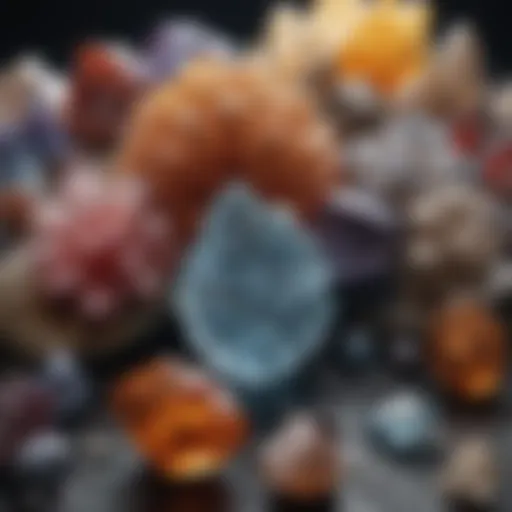
Crystals can be categorized into several groups based on their characteristics:
- Minerals: Naturally occurring inorganic substances with a defined chemical composition, e.g., quartz, feldspar.
- Gemstones: Precious or semi-precious stones, like sapphires or garnets, often cut and polished for jewelry.
- Organic Crystals: Formed from biological processes, these include pearls and amber.
- Metals and Alloys: Crystalline structures that form in various metals, such as gold and silver, which also possess unique properties.
Notable Categories
There are many notable categories within the realm of crystals:
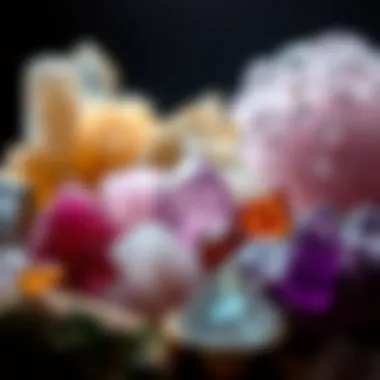
- Healing Crystals: Promoted for their alleged metaphysical properties, including amethyst and rose quartz.
- Collector's Gems: Rare and high-value stones like the blue diamond or red beryl, sought after by enthusiasts and investors.
- Fossilized Crystals: Fossils preserved in crystal-like structures, bridging the gap between geology and paleontology.
"Every crystal tells a story, waiting for someone willing to listen."
These classifications help not only in organizing your collection but also in understanding the specific properties and values each type brings.
To further deepen your crystal knowledge, consider visiting resources such as Wikipedia or Britannica.
Equipping yourself with this foundational understanding sets the stage for honing the skills necessary for crystal identification. Let's dive into the methods that make determining your crystals a straightforward and informed process.
Understanding Crystals
Crystals, often seen as mere decorative rocks or collectibles, embody much more than meets the eye. Understanding crystals serves as a cornerstone for anyone looking to delve deeper into their beauty, properties, and the science behind them. The significance of this topic cannot be overstated, especially for rock and fossil collectors who seek to identify and appreciate their specimens with precision. Gaining a solid grasp of what crystals are, how they form, and their various types will empower collectors not only to enhance their collections but also to engage meaningfully in discussions within their communities.
What Are Crystals?
Crystals are solid substances where the atoms are arranged in an orderly repeating pattern. This structured formation leads to the unique geometric shapes that many aficionados admire. They form in numerous ways, often stemming from natural geological processes where minerals crystallize from molten rock or precipitate from solutions. When we talk about crystals, we're encompassing a wide array of minerals, each with distinct characteristics.
Consider the vibrant hues of amethyst or the clear sparkle of quartz; each represents a fascinating blend of elemental composition and external conditions that dictate its formation. Crystals not only capture the imagination but carry historical and cultural significance across various civilizations. In many cultures, they are believed to possess healing properties, enhancing mental and physical well-being.
The Science Behind Crystal Formation
The formation of crystals is a meticulous process backed by scientific principles. At the most basic level, it involves the combination of molecules or atoms that arrange themselves according to certain principles. Most commonly, this occurs through
- Solidification: When molten rock cools, minerals crystallize as they transform from liquid back to solid.
- Evaporation: In solutions, minerals can precipitate out as water evaporates, leaving behind solid crystal forms.
- Metamorphosis: Changes in temperature and pressure can lead existing minerals to reorganize into new crystal structures.
Knowing these aspects opens the door to better understanding the properties of crystals you encounter. Each facet of their formation can reveal clues about their origins and potential uses.
Common Types of Crystals
When venturing into the world of crystals, several types stand out based on their appearance and chemical structure. Some of the common varieties include:
- Quartz: One of the most abundant minerals in the Earth’s crust, quartz can appear in many colors and forms. Its hexagonal structure is particularly recognizable.
- Calcite: Found in sedimentary rocks, calcite is known for its distinctive rhombohedral shape and can exhibit a range of colors from white to yellow to blue.
- Gypsum: This soft mineral, often appearing in translucent, white or pink shades, displays a unique crystal habit, known for its ability to form large clusters.
- Fluorite: Recognized for its vibrant colors,fluorite exhibits cubic crystals and is largely sought for both its decorative and metaphysical properties.


These basic types illustrate the diversity within the realm of crystals. Understanding these variations is essential for anyone keen on identifying crystals in their collection or just starting their journey.
Initial Identification Techniques
Identifying crystals is a delicate dance between science and art. The initial identification techniques play a crucial role in this exploration. These methods provide a foundational understanding for rock and mineral enthusiasts, helping them to differentiate between various specimens efficiently. Well-executed identification minimizes the chances of confusion, particularly when many crystals bear a striking resemblance to one another. The significance of mastering these techniques cannot be overstated, especially as they help determine the value and usability of crystals in collections or practices.
Visual Characteristics to Consider
When it comes to identifying crystals, one can't overlook the visual characteristics. These elements tell a story of the crystal's origin and quality. First and foremost, take a close look at the color. While vibrant hues can be eye-catching, they can sometimes be misleading. For instance, two different minerals may share similar colors, leading to possible misidentification. It's essential to observe the transparency as well; is it clear, translucent, or opaque?
Next, consider any distinct patterns on the crystal's surface. Some crystals display banding, while others may have unique formations like growth striations or inclusions. It's also worthwhile to inspect the shape and form of the crystal. Different minerals crystallize in various geometric patterns, from cubic to hexagonal forms.
Moreover, the presence of weathering or alteration on the crystal can offer clues about its identification.
"A keen eye will often catch the smallest of details— these are the breadcrumbs of identification."
In summary, a thorough observation can guide collectors and researchers in the right direction, paving the way for more advanced identification methods.
Using Hardness Tests
Hardness tests are a powerful tool in the identification toolkit. Understanding the mineral's hardness is critical because it measures resistance to scratching. This is where Mohs Hardness Scale comes into play. The scale ranges from talc, the softest at one, to diamond, the hardest at ten. To conduct a straightforward hardness test, you can use everyday objects like a fingernail, a penny, or glass.
- Fingernail: If the crystal scratches easily, it’s softer than 2.5.
- Penny: If it scratches the crystal, it ranks between 2.5 and 3.5.
- Glass: If it scratches glass, the hardness is higher than 5.5.
This method is not just for fun; it provides direct, tangible data on the mineral's properties. Clarity on hardness can eliminate most possible candidates in a complex identification process, enabling a more precise determination of the crystal type.
The Importance of Luster and Clarity
Luster refers to how a crystal interacts with light, revealing additional dimensions to identification. From glassy to waxy, and dull to metallic, the type of luster often signifies specific mineral groups. For instance, quartz typically exhibits a glassy luster, while galena shines metallically. Understanding this property not only enriches your knowledge but also your appreciation for these natural wonders.
Clarity, on the other hand, pertains to how transparent or translucent a mineral appears. Crystals may be flawless or may contain imperfections such as inclusions or bubbles. These imperfections can both lower a crystal's value and offer insight into its quality and formation.
Collectors often find incredible value in these elements as they lend themselves to the overall aesthetic and potential utility of the crystal. Assessing luster and clarity can ultimately contribute greatly to your identification journey.
For those who are keen on deepening their understanding of crystals, consider visiting reputable resources like Wikipedia or Britannica.
By embracing these initial techniques, crystal aficionados can embark on a more informed journey into the world of minerals, enhancing both their collections and their knowledge.
Detailed Identification Methods
Identifying your crystal can be a nuanced task, often requiring a keen eye and a bit of scientific know-how. The detailed identification methods serve as your roadmap, guiding you through various analytical approaches. Each method unpacks layers of information that can either confirm or challenge your initial assumptions about a crystal. By fully understanding these methods, you not only equip yourself with identification skills, but also deepen your appreciation for the unique characteristics each crystal possesses.
Color and Streak Testing
Color may seem like an obvious clue when identifying crystals, but it’s often not the end of the story. Different conditions during the crystal's formation can lead to color variations. Thus, utilizing the streak test can provide a more reliable indication of a crystal’s true color. To conduct a streak test, you can simply rub the crystal against a piece of unglazed porcelain. The streak left behind can reveal the true color of the mineral and may differ dramatically from the visible color of the crystal itself.
For instance, consider hematite, which often appears shiny or metallic gray. However, when streaked, it leaves a reddish-brown mark. This stark contrast can aid in accurately identifying the mineral, along with other characteristics.
"While color can lead you astray, a streak will reveal a mineral's honesty."
To summarize, here are key points about color and streak testing:
- Visual color can be misleading: Variations occur due to different impurities.
- Streak offers a clear picture: Less affecting and often more consistent.
- Note the location: If you’re in the field, sometimes a rough surface allows for easier streak testing.
Using Tools: Magnifying Glass and Scale
Your eyes are your first set of tools for crystal identification, but sometimes nature's intricacies require you to magnify the situation. A good-quality magnifying glass can help spot details like crystal formations and inclusions which might go unnoticed. When using this tool, look for terms like zonation or twinning that might suggest specific mineral families.
Alongside a magnifying glass, a scale is invaluable for measuring specific gravity. Specific gravity is the ratio of the density of the mineral to the density of water. You may simply compare the weight of a crystal to an equal volume of water, but more refined methods involve graduated cylinders and precision scales to yield accurate results. Many resources suggest using a high precision scale for the most effective identification.
Key considerations when handling tools:
- Invest in quality: A poor magnifying glass can lead to misleading interpretations.
- Be patient: Examine your specimen meticulously, allow details to emerge through focused observation.
- Document measurements: Keeping a log can help you spot patterns over time in your identified crystals.
Understanding Crystal Systems
The study of crystal systems is foundational to mineralogy and can be an illuminating phase of identification. Crystals are classified into seven systems based on the arrangement of their internal components. These systems influence how the crystals grow and their external appearance. The major classifications include cubic, tetragonal, orthorhombic, hexagonal, trigonal, monoclinic, and triclinic.
For example, quartz belongs to the hexagonal system, and its unique geometrical properties lead to specific shape manifestations. Knowing the system to which a crystal belongs can drastically narrow down your identification choices.
As you delve deeper, consider these factors:
- Observe symmetry: Recognizing symmetry in crystals can hint at their classification.
- Incorporate visuals: Diagrams and charts can significantly assist in grasping complex crystalline structures.
- Explore with others: Join local mineralogy clubs or online communities to share insights.
Identifying a crystal is akin to piecing together a puzzle, where each method you employ adds a vital piece of information. Take time to understand these tools and techniques while practicing your observations—remember, the more you know, the more confident you can be in your identification skills.
References for Crystal Identification
When it comes to identifying crystals, reliable references can be the difference between an accurate identification and a confusing mix-up. The value of having robust resources cannot be underestimated. They serve as foundational pillars for any collector or enthusiast, guiding them through the nuances of various crystal types, their properties, and how to categorize them effectively. By utilizing the right references, you can enhance your understanding, refine your skills, and ultimately enjoy the art of identification with assurance.
Identification Guides and Chart Resources
Identification guides and charts act like roadmaps in the often-challenging landscape of crystal identification. They break down complex crystallography concepts into digestible nuggets of information, making them accessible for everyone from beginners to seasoned collectors. Here are some elements to consider:
- Visual Representation: Most guides provide charts that depict various crystals alongside their properties. These visuals can help in recognizing the color, luster, and forms typical of each mineral.
- Property Listings: These resources typically outline key characteristics such as hardness, specific gravity, and streak colors. Understanding these traits is crucial to making accurate distinctions between similar-looking crystals.
- Field Guides: Some printed guides are neighborhood-friendly and can be taken outdoors. They provide context for where different crystals can be found based on geographical locations.
Incorporating recommended publications and classic field guides like Rocks & Minerals or the Mineral Identification Pocket Guide is a good idea. These can sharpen your identification prowess over time. A simple online search using queries like "crystal identification guide pdf" will lead you to plenty of digital options.
Online Databases and Community Input
In our increasingly digital age, turning to online databases is both time-efficient and rewarding for enthusiasts seeking clarity on specific crystals. However, individual insight from community interactions adds layers of understanding that can transcend data alone. Here's why tapping into these resources is beneficial:
- Comprehensive Archives: Websites such as Mindat.org provide a treasure trove of information, including detailed descriptions of minerals, their locations, and images submitted by users.
- Forums and Discussion Boards: Sites like Reddit offer various user-generated threads where community members share identification pics and offer advice. Joining these discussions can lead to valuable tips and shared experiences that can make your journey easier.
- Real-Time Updates: Communities often have the latest news on emerging discoveries or trends in the crystal world, keeping your knowledge current.
Participating in these online spaces allows you not only to gather guidance but also to contribute and share your own findings. As the saying goes, "two heads are better than one," and in many cases, a community truly adds depth to your understanding of crystals.
"The beauty of crystals lies not only in their physical form but in the shared knowledge that elevates our understanding of them."
So, whether you're diving into a detailed guide or posting a crystal photo in an online forum, these resources provide the scaffolding needed for confident identification. Familiarity with guides, online databases, and community support will not only elevate your personal collection but enrich your overall understanding of this fascinating field.
Practical Applications of Crystal Identification
Understanding the practical applications of crystal identification is crucial for anyone who engages with these fascinating natural formations. It is not just about knowing what type of crystal you hold in your hand; it involves utilizing that knowledge effectively in various contexts. This section elucidates the importance of identification in both personal collection enhancement and its broader implications in alternative practices.
Collecting and Displaying Identified Crystals
Collecting crystals can be a rewarding hobby. When you identify a crystal accurately, it adds to the allure of your collection. Knowing which type of crystal you have means you can display it with pride, accompanied by the right information. Here are a few key aspects to consider:
- Display Aesthetics: Familiarity with your crystals helps in creating visually appealing arrangements. For instance, a clear quartz can beautifully contrast with the deep hues of amethyst. Understanding the properties of each crystal enhances how they complement each other visually.
- Informative Tags: Labeling your crystals not only offers insights into their characteristics but also engages others who may view your collection. Knowing the name and the benefits associated with each piece can spark conversations and deepen the appreciation for the crystals.
- Historical Context: Displaying a crystal with its background story offers a layer of intrigue. For example, communicating how a specific crystal has been used for centuries in various cultures enriches the collecting experience.
Utilizing Crystals in Alternative Practices
Crystals are often associated with various alternative practices, ranging from holistic healing to energy work. Identifying your crystals allows you to harness their potential effectively. Here are some considerations for their use:
- Healing Properties: Each crystal is believed to carry unique healing properties. For example, rose quartz is thought to promote love and emotional healing, while black tourmaline is associated with protection against negative energies. Armed with precise identification, you can choose the right crystal tailored for your needs.
- Meditation Enhancer: Specific crystals can enhance meditation practices. Identifying a crystal like amethyst, which is often used for spiritual growth, can enrich your meditative experiences. Holding or placing crystals on your chakra points can foster a deeper connection during meditation.
- Creating Crystal Grids: Crystal grids are arrangements of crystals designed to amplify energy. Knowing the properties of your crystals can guide you in arranging them for specific intentions, such as attracting prosperity or promoting peace.
In summary, incorporating practical applications of crystal identification into your routines can elevate your understanding and connection with these beautiful formations. Whether through collecting or utilizing crystals in various practices, the benefits are multifaceted. As you delve deeper into crystal identification, you'll find a wealth of opportunities to enhance both your individual experience and the value of community connections.
"A well-defined collection is not just a display of objects, but a gathering of stories, properties, and potential energy that transcends the ordinary."
For further exploration of crystals and their applications, you may check resources such as Wikipedia on Crystals or join discussions on platforms like Reddit - Crystals.
Common Mistakes in Crystal Identification
When it comes to crystal identification, making mistakes is not just common; it's almost part and parcel of the journey. Understanding these slip-ups can save both novice and seasoned collectors a heap of time and frustration. Misidentifications can lead to improperly categorized collections, which can undermine the educational aspect of collecting. Moreover, overlooking the slightest detail could mean missing out on valuable insights into the stones one holds dear. This section dissects prevalent pitfalls in crystal identification to bolster your skillset.
Overlooking Subtle Characteristics
Crystals often come equipped with audacious personalities, marked by vibrant colors and striking shapes. However, their subtle traits hold equal importance. Experienced collectors know that a faint hue, a specific inclusions pattern, or a quirk in crystalline structure can be a telltale sign of a particular type. For instance, one could easily mistake a smoky quartz for a brown tourmaline without paying close attention.
Here’s why subtle characteristics matter:
- Color Variations: Many stones can appear nearly identical at first glance. Clear quartz and rock crystal, even identical in appearance, have nuanced differences—often found in their transparency or internal veining.
- Texture and Clarity: A smooth surface may indicate a polished piece that obscures natural imperfections. On the other hand, recognizing slight roughness in a crystal, such as tiny scratches or dimples, can clarify its identity.
- Internal Features: Inclusions, like bubbles or fibers, are more than just flaws. They are stories—markings that tell the crystal’s tale. For instance, rutile inclusions in quartz can dramatically change its market value and classification.
"The minute you overlook the little things, you lay the groundwork for misidentification."
Misidentifying Common Crystals
The labyrinth of crystal types can be especially complex. Many first-time collectors often confuse widely-occurring gems with their less common counterparts. This misidentification can lead to headaches during collection organization and potential misinformation about your specimens.
One of the first slip-ups occurs between amethyst and fluorite, especially in their purple forms. Here are some common misidentifications and how to spot the difference:
- Amethyst vs. Fluorite: Both can present captivating shades of purple. Amethyst radiates a subtle warmth, while fluorite tends to show a more cool tone with characteristic zoning. A quick luster test can also reveal the truth—amethyst shows a vitreous shine, whereas fluorite is more glossy.
- Quartz vs. Glass: Sometimes, people might assume quartz is merely a piece of glass. Conducting a hardness test can clarify their identities. Quartz is robust and scratches glass, thereby establishing its rightful place.
- Tiger’s Eye vs. Hawk's Eye: Both variations of the same mineral family may beguile the casual observer. However, recognizing the golden sheen of tiger’s eye versus the bluish hue of hawk’s eye can help refine your classification.
Reflecting on these common errors can transform how you approach crystal identification. Gaining familiarity with these factors offers a pathway to enhancing your collection’s integrity and your confidence as a collector.
The Role of Community in Crystal Identification
Identifying crystals can be both a solitary and a collective endeavor. Engaging with a community of fellow enthusiasts offers not only support but also a wealth of shared knowledge. This collective experience can greatly enhance the identification process and open doors to new insights and methods. By participating in community activities related to crystal identification, individuals can learn from one another, exchange findings, and cultivate a deeper appreciation for the nuances of mineralogy. This section will discuss the significance of community involvement and how it can enrich your journey in crystal identification.
Share Your Findings in Collectors’ Groups
Contributing to collectors’ groups can be immensely rewarding. These groups offer a platform where members can share their crystal discoveries, identification successes, and, yes, even their mistakes. Each member carries unique knowledge that can help in identifying similar crystals. For instance, one might come across a rare specimen and post images and descriptions in a Facebook crystal group. The input from seasoned collectors can shed light on previously unknown aspects of that stone, elevating your understanding. This not only builds confidence in your ability to identify but also reinforces a sense of belonging within the crystal community.
Some advantages of sharing findings include:
- Collective Knowledge: Learning from different perspectives can enhance your expertise.
- Feedback and Guidance: Proper identification often requires multiple eyes. Input from others can lead to correct identification where you might have gone astray.
- Networking Opportunities: You never know who might have the same interests. Users can connect on platforms such as Reddit or specialized forums, building lasting friendships.
Sharing is also about showcasing the beauty of your finds—who wouldn’t want to show off a stunning example of amethyst or quartz? By sharing, you inspire others in their own journeys and contribute to the ever-growing tapestry of knowledge in the community.
Participate in Identification Workshops
Engaging in identification workshops can provide invaluable hands-on experience in recognizing crystals accurately. These gatherings, often organized by local mineral clubs or universities, present participants with the chance to examine various specimens under the guidance of experienced mineralogists and educators.
During these workshops, participants can expect:
- Interactive Learning: Unlike studying from books, workshops offer tactile experiences that improve identification skills. You get to touch, examine, and understand various mineral properties firsthand.
- Expert Insights: Having professionals or seasoned hobbyists leading discussions can lead to discovering techniques you may not learn elsewhere. Their explanations on crystallography, for instance, can illuminate confusing aspects of crystal systems.
- Useful Resources: Workshops often provide access to identification resources, charts, or even projects that encourage ongoing education. They can help attendees compile a comprehensive field guide personalized to their local regions.
"One should never underestimate the power of community and workshops in enhancing your crystal identifying skills. The shared experiences and hands-on practices of workshops can turn a novice into an expert over time."
As you navigate your crystal identification journey, remember that both online and in-person community engagement is not just about finding or identifying crystals. It’s about cultivating a network of knowledge that you can share and grow from together.
The Future of Crystal Identification
In the ever-evolving world of mineralogy, the future of crystal identification holds a realm of possibilities. Keeping pace with advancements in technology and knowledge, we can better differentiate and appreciate the myriad of crystals we collect. This section is vital as it delves into how new methodologies can enhance our understanding and accuracy in identifying crystals, ultimately benefiting both hobbyists and professionals alike.
Emerging Technologies in Mineralogy
Rapid strides in technology are transforming how we approach crystal identification. Innovations like artificial intelligence (AI) and machine learning are beginning to influence mineralogy. These tools can analyze crystal structures at a speed that no human can match. For example, AI algorithms can compare high-resolution images of crystals in databases to assist in pinpointing exact species, leading to reliable identifications without the need for extensive manual testing.
Additionally, developments in spectroscopy have opened new doors. Techniques like Raman spectroscopy allow us to determine the chemical composition of a crystal quickly. By using lasers, this method can identify unique spectral fingerprints for specific minerals, which could ease the identification process dramatically.
Incorporating these technologies in practical applications can lead to significant improvements:
- Speed and accuracy: AI can provide instant results, minimizing human error.
- Enhanced databases: With the integration of big data, researchers can share findings and insights across a global network, strengthening collective knowledge.
- Accessibility: Portable spectroscopy devices can empower collectors to identify crystals on-the-go, making identification more practical and immediate.
"Technological advancements are not merely tools; they are gateways to deeper understanding."
The Importance of Continuing Education
As we look at the future of crystal identification, it is essential not to overlook the role of continuing education. Knowledge is not stagnant; it grows, just like crystals crystallizing over time. Workshops, online courses, and community gatherings provide rock and fossil enthusiasts with a venue to learn new techniques and share discoveries.
Staying updated can also help prevent common pitfalls. For example, without current knowledge, collectors might miss out on the latest techniques, leading to misidentifications or misunderstanding of mineral properties. Moreover, newer methods can unearth aspects of crystals previously unknown, enriching the collector's experience and understanding.
Consider participating in:
- Webinars based on recent studies in mineralogy.
- Workshops that focus on new technologies, such as AI tools or advanced spectroscopy.
- Collector groups on platforms like Facebook or Reddit, where ongoing discussions can provide insights into real-world applications of new methods.
Ultimately, by committing to lifelong learning, collectors can ensure they remain at the forefront of crystal identification. It fosters a sense of community and encourages knowledge sharing among enthusiasts, which fuels the collective passion for the hobby.