A Deep Dive into the Varied World of Crystals
Overview of the Topic
Crystals are more than just beautiful stones. They come with a rich tapestry of history and science that beckons to be explored. In essence, a crystal is a solid material whose constituents—atoms, molecules, or ions—are arranged in an orderly repeating pattern extending in all three spatial dimensions. This organized structure gives crystals their distinct shapes and properties, making them both fascinating and vital in various applications.
Definition of Key Terms
To understand crystals better, a few key terms are essential:
- Crystallography: The scientific study of crystals, including their structure and properties.
- Minerals: Naturally occurring inorganic substances with a definite chemical composition; many crystals are formed from minerals.
- Amorphous Solids: Unlike crystals, these do not have a long-range order in their molecular structure.
The etymology of the word crystal comes from the Greek word 'kristallos', meaning 'icy cold' or 'frozen'. The association with ice surrounds the early ideas of crystals existing in nature.
Historical Significance
The lore surrounding crystals dates back to ancient civilizations. In Egypt, crystals were more than just ornamental; lapis lazuli and turquoise were integral in hieroglyphics and were believed to possess divine powers. Ancient Greeks, too, were captivated by crystals, associating them with clarity and purity. The philosopher Plato proposed that the universe was made up of four basic elements, with various crystals emerging from those elements.
Through the ages, different cultures have utilized crystals for various purposes, from tools in alchemy to gemstones in jewelry. Even in the modern world, crystals find applications in technology, like in watches and smartphones, showcasing their enduring significance.
Types of Crystals
There are countless types of crystals, each boasting unique characteristics and uses. To gain insight into this stunning diversity, crystals can be classified based on various parameters.
Classification of Different Crystals
- Natural Crystals: Formed through natural geological processes. Examples include quartz and amethyst.
- Synthetic Crystals: Manufactured by humans, oftentimes for specific applications. A well-known example is synthetic diamonds.
- Organic Crystals: Composed of organic materials, such as sugar or amino acids.
Notable Categories
Delving deeper, we categorize crystals further based on their attributes:
- Ionic Crystals: Formed through ionic bonds, common examples are table salt (sodium chloride). They exhibit high melting points and often dissolve in water, making them key in chemical applications.
- Covalent Crystals: These involve shared electrons within a network structure. Diamond, for instance, stands as an exemplary covalent crystal, celebrated for its hardness.
- Metallic Crystals: Comprising metallic bonds, they are typically malleable and conductive. An example includes iron crystals.
- Molecular Crystals: These are formed from molecules held together by weak intermolecular forces. Sugar crystals exemplify this category, showcasing how molecular structure determines physical properties.
"The diverse world of crystals not only contributes immensely to our understanding of materials but also hints at the mysteries of the universe."
Understanding crystals on this level allows collectors and enthusiasts to appreciate the nuances not just in their beauty but also in the science behind these stunning forms.
Culmination
In this exploration, we recognize that crystals serve as a bridge between art and science, connecting nature's reflections with human ingenuity. Their classifications reveal layers of complexity, demonstrating why they continue to hold fascination across various disciplines and cultures.
For those eager to delve deeper into this world, resources like Wikipedia, Britannica, and forums such as Reddit can provide further insights and discussions around crystals, enhancing both knowledge and appreciation.
Prelude to Crystals
Crystals, those stunning manifestations of nature's artistry, captivate both the scientific community and the casual observer alike. This article aims to dissect the wonders of these solid materials, showcasing how their properties extend far beyond mere aesthetics.
Crystals, often perceived solely as beautiful collectibles for enthusiasts and jewelers, hold immense significance across various fields. They are key players in industries ranging from electronics to medicine. Understanding the nature of crystals not only enhances appreciation for these natural wonders but also highlights the diverse applications they have in our daily lives.
Defining Crystals
At its core, a crystal can be defined as a solid material whose constituents—such as atoms, ions, or molecules—are arranged in an orderly repeating pattern extending in all three spatial dimensions. This orderly structure is what leads to the unique geometric shapes associated with crystals. For example, table salt forms cubic crystals, while quartz often manifests in hexagonal shapes. The specific arrangement of the particles determines the properties of the crystal, including its appearance, hardness, and how it interacts with light.
To delve deeper, we can categorize crystals based on different characteristics, such as how they are formed, what they are composed of, and their geometric structure. This classification helps in identifying the different types of crystals and understanding their applications. Folks often toss around the term "crystal" without grasping the underlying complexities that contribute to their formation.
The Importance of Studying Crystals
Why should we take the time to explore the depths of crystals? For one, they provide insight into the Earth’s geological history. Learning about crystal formation gives us clues about the conditions present on our planet at various points in time. Crystals reveal stories of extreme heat, pressure, and even the presence of various minerals in our planet's crust that are not readily observable.
Moreover, studying crystals has practical applications. In electronics, for example, semiconductors such as silicon crystals are fundamental to modern technology. In medicinal fields, certain crystals like quartz are researched for their supposed healing properties. The fascination doesn’t end there; there’s a cultural and metaphysical dimension as well, where crystals are thought to possess energies that can influence well-being and state of mind.
"Crystals are the most passive yet the most influential entities in nature; they bear silent witness to our Earth's past and promise the advancements of our future."
In summary, the study of crystals is a confluence of art, science, and culture. As we traverse through the fascinating realm of crystals, we will uncover their many faces—from crystalline structures to their uses in different industries and cultures. This exploration will not only deepen our understanding but also enhance our appreciation of the intricate tapestry of life on Earth.
Types of Crystals Based on Structure
Understanding the different types of crystal structures is crucial for anyone interested in the world of geology, mineralogy, or even metaphysical properties. The structure of a crystal dictates its physical characteristics and how it interacts with light, heat, and even sound. This section will shed light on four primary types of crystals, each offering unique attributes and applications.
Ionic Crystals
Ionic crystals are formed when atoms transfer electrons, creating ions that bond together. In simple terms, think of it as a game of catch – one atom throws an electron to another, leading to a connection held by electrostatic forces. Common examples include sodium chloride, or table salt, and magnesium oxide. These minerals are not just visually appealing; their structures impart several important properties:
- High Melting and Boiling Points: Due to the strong forces holding them together, ionic crystals require significant energy to break apart.
- Electrical Conductivity: In solid form, they do not conduct electricity, but when dissolved in water, their ions are free to move, allowing the solution to conduct electricity.
- Brittleness: Ionic crystals are typically brittle; applying a force can cause them to shatter rather than bend.
Practical Note
It’s important to handle these crystals with care during collection. Their tendency to break could easily turn a collecting trip into a disappointing endeavor.
Covalent Crystals

Covalent crystals, also known as network solids, are formed by atoms sharing electrons in a covalent bond, creating a giant lattice that extends throughout the material. A prime example of this is diamond, known for its unparalleled hardness and dazzling sparkle.
Key characteristics include:
- Extreme Hardness: Because of the interconnected network of bonds, covalent crystals can be exceptionally tough.
- Variable Conductivity: While most don’t conduct electricity well, some, like graphite, have unique electrical properties that allow for conductivity through layers.
- High Melting Points: Similar to ionic crystals, the strength of covalent bonds means they require high temperatures to melt.
"In covalent crystals, each atom is essentially a member of an intricate web, contributing to the stability and strength of the entire structure."
Metallic Crystals
Metallic crystals are characterized by the presence of free electrons that can move easily throughout the crystal lattice. The result is a collection of positive ions surrounded by a sea of delocalized electrons. This structure allows metallic crystals to boast several remarkable properties:
- Ductility and Malleability: These crystals can be bent or shaped without breaking, making them useful in a wide range of applications from wires to structural components.
- Excellent Conductors of Heat and Electricity: The free movement of electrons facilitates the transfer of energy efficiently.
- Lustrous Appearance: Many metallic crystals exhibit shiny surfaces, giving them their attractive appearance.
Molecular Crystals
Molecular crystals consist of molecules held together by weaker van der Waals forces, rather than the strong ionic or covalent bonds seen in other types. These crystals include common substances like ice and sugar. They have distinct properties:
- Lower Melting and Boiling Points: The weaker forces require less energy to break, leading to relatively lower melting points.
- Softness: Molecular crystals tend to be softer than their ionic or covalent counterparts due to the nature of their bonding.
- Variable Solubility: Their solubility in water or organic solvents can vary widely, depending on the functional groups present in their molecular structure.
When it comes to collecting molecular crystals, it’s often a case of finding the sweetest harvest like sugar or seeking the clear beauty of ice crystals.
In summary, understanding the structural types of crystals helps in appreciating their unique properties and diverse applications. This knowledge not only enriches the collector's experience, but allows deeper insights into their behavior and significance in various fields, from technology to aesthetics and beyond.
Types of Crystals Based on Mineral Composition
Understanding types of crystals based on their mineral composition is fundamental to grasping not just their physical properties but also their applications in various fields. Different minerals contribute unique attributes to crystals, influencing their formation and the environments in which they thrive. Potential travelers of the crystalline journey might find it intriguing to discover these groups as they showcase the vibrant tapestry of our planet's geological history.
Silicate Minerals
Silicate minerals, which dominate the Earth's crust, are known for their unique framework of silicon and oxygen. This category constitutes more than 90% of the Earth's crust, making them incredibly important in the study of geology and mineralogy. The varied forms these minerals can take result in a stunning assortment of crystals, from the beautifully structured quartz to the intricate formations of feldspar.
When it comes to identification, silicates often come packed with a variety of other elements, like aluminum, magnesium, and iron, affecting everything from color to hardness. Collectors taking a close look at these crystals may consider their crystal habits, as these can change dramatically based on environmental factors during their formation.
Carbonate Minerals
Carbonate minerals are another major player on the crystal stage, primarily composed of the carbonate ion (CO₃) alongside metal ions. These minerals, such as calcite and dolomite, are not only known for their beauty but also their applications in industries ranging from agriculture to building materials.
It's fascinating to note that carbonate minerals often form in marine environments, becoming a significant part of limestone and marble. Hobbyists and collectors find these minerals appealing not just for their visual allure but also for their historical significance, revealing clues about ancient oceans and climates. Think of calcium carbonate as the performer of the mineral world, revealing layers of Earth's past through its varied crystal forms.
Oxide Minerals
Next in the lineup are oxide minerals, composed of oxide ions combined with metals. Iron oxide and aluminum oxide are notable examples within this category. While they may not seem as whimsical as silicates or carbonates, their importance cannot be overstated in various technological applications, including electronics and ceramics.
Identifying these crystals may require a keen eye, as their colors can range from rich reds to deep blacks, depending on their metallic content. Collectors often seek out specific varieties like hematite or corundum, both cherished for their aesthetic and industrial value. Featuring such crystals in a collection can add not only diversity but also a deeper understanding of the elemental properties that shape our world.
Sulfide Minerals
Lastly, sulfide minerals, consisting primarily of sulfur combined with metals, present a unique discussion in crystal classification. These minerals, such as pyrite, galena, and chalcopyrite, often present in ore deposits, are crucial for extracting valuable metals and play significant roles in mining.
Collectors might find sulfides appealing due to their metallic luster and diverse colors, ranging from shimmering gold to brilliant blue. However, enhancing your collection with sulfide minerals comes with essential safety considerations, as some can oxidize and release harmful substances. It’s wise to study these minerals further to prevent any health risks while appreciating their beauty.
"Crystals are nature's diamonds, shaped not just by pressure but by history, climate, and the elements beneath our feet."
Gemstone Varieties and Their Classifications
Gemstones represent a captivating subset of crystals, finely categorized based on various characteristics ranging from rarity to aesthetic appeal. Delving into gemstone varieties not only enhances one’s appreciation for these natural wonders but also provides a significant framework for collectors and enthusiasts alike to understand the market and value of their pieces.
Understanding the classifications of gemstones aids collectors, jewelers, and casual admirers in recognizing what makes one gem more coveted than another. The beauty of gemstones lies not only in their brilliance but also in their unique stories and geologic histories—each with a tale as intricate as the facets they display.
Precious Gemstones
Precious gemstones are the elite of the crystal world. They boast a rarity that commands attention and respect. Traditionally, the term "precious gemstones" primarily refers to diamonds, rubies, emeralds, and sapphires. These gems are not just valued for their visual qualities; their significance transcends simple aesthetics.
- Diamonds are celebrated for their hardness and brilliance, often considered the ultimate expression of luxury and sentiment, especially in engagement rings.
- Rubies embody passion and love, with their vibrant red hues capturing the eye and heart equally. In many cultures, rubies are seen as symbols of wealth and power.
- Emeralds, rich in green, have been revered in various civilizations for centuries, believed to bring harmony and promote balance in life.
- Sapphires, available in a spectrum of colors but blue being the most well-known, symbolize wisdom and royalty.
The market often places a high value on these stones due to their rarity and the consistent demand they attract, making them desirable not only for personal collections but as investment opportunities. The cut, clarity, color, and carat, famously known as the Four Cs, play a pivotal role in determining the worth of these gemstones.
"In gemstones, value is not merely in what your eyes see, but what kind of story your heart feels."
Semi-Precious Gemstones
On the flip side are semi-precious gemstones, a term that, while somewhat misleading, refers to a broader category that includes an abundance of colorful, intriguing stones. Not necessarily less valuable in terms of beauty or function, these gemstones often shine in unique ways.
Examples of semi-precious gemstones encompass:
- Amethysts, characterized by their purple hues, are symbolic of peace and clarity, widely used in jewelry with a spiritual twist.
- Aquamarines, resembling tranquil sea waters, are believed to hold calming properties and are popular in both casual and high-end jewelry.
- Topaz and Garnet round out the ranks, each possessing distinct colors and characteristics that spark the interest of collectors.
Understanding the nuances between precious and semi-precious gemstones is crucial for anyone engaging with the realm of gemstone collection. More often than not, a semi-precious stone can be just as stunning and unique as its precious counterparts, and it might even hold historical or cultural significance that enhances its allure.
Crystals by Geometric Structure
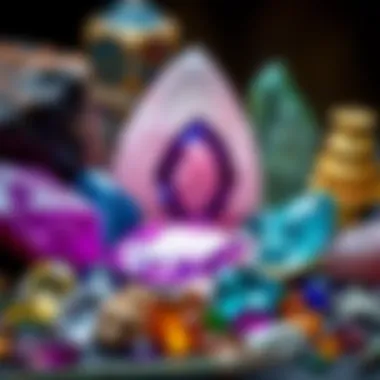

Understanding crystals through their geometric structures offers a fascinating glimpse into their atomic arrangements and properties. This classification method is essential for several reasons. Firstly, it helps in the identification of crystals, as their shapes often bear a strong resemblance to their internal symmetry and lattice networks. For collectors and enthusiasts, being able to visually recognize these shapes can enhance the appreciation of their specimens.
Secondly, the geometric structure plays a crucial role in determining a crystal’s physical properties, such as cleavage, fracture, and optical characteristics. The arrangement of atoms influences how light interacts with a crystal, which is significant in gemology and material science. Lastly, it has implications in various applications, from technology to biotechnology, as understanding the geometric arrangement can lead to the development of new materials and innovations.
In the following sections, we will delve into specific geometric types of crystals, illuminating their unique properties and significance in both nature and human application.
Cubic Crystals
Cubic crystals are often seen as some of the most symmetrical and aesthetically pleasing of all crystal types. Each face of a cubic crystal displays a square shape, contributing to a characteristic form that is both simple and yet complex at the atomic level.
Examples of cubic crystals include table salt (sodium chloride) and pyrite. The symmetrical nature of these crystals allows for easy cleavage along their planes, which can be useful for collectors looking to identify them. The atomic structure consists of unit cells arranged in a three-dimensional lattice, which contributes to their cubic shape. Their well-defined edges and vertices in the cubic system often make them a prime focus in both educational settings and among hobbyists.
Hexagonal Crystals
Hexagonal crystals display a striking shape made up of six faces, leading to their name. This structure manifests in crystals such as quartz and beryl, where the symmetry can lead to unique optical properties and stunning visual appeal.
The hexagonal system has a specific arrangement of atoms that allows for various forms, including the brilliant hexagonal prism of quartz. This aspect makes hexagonal crystals particularly interesting for gem enthusiasts, as they can display a range of colors and effects due to light refraction. Additionally, hexagonal arrangements can influence the hardness and stability of the minerals, making them essential in both natural exhibits and industrial contexts.
Tetragonal Crystals
Tetragonal crystals can be seen as an extension of the cubic system, where one axis is longer than the other two, forming a rectangular prism. This symmetry leads to unique optical properties that may differ from true cubic forms. Tin oxide and zircon are classic examples of tetragonal crystals.
Unique to the tetragonal structure is how the elongated axis can affect the crystal's cleavage and fracture patterns, producing fissures that are distinct from other types. For hobbyists and professionals, these patterns can signal particular growth conditions, informing them about the local geological history where the crystal was found.
Orthorhombic Crystals
For the orthorhombic classification, three axes of differing lengths characterize the structure. Each angle between the axes remains at 90 degrees, leading to intricate shapes like that of topaz and olivine.
The diverse array of orthorhombic minerals presents challenges and advantages for identification. Collectors may note the complexity in cleavage directions that differ from cubic crystals, influencing how they might cut or display these specimens. Their unique structure can also lead to various forms of chemical bonding, enhancing the crystal's durability and aesthetic appeal.
Monoclinic Crystals
Monoclinic crystals present a more complicated symmetry, with one axis inclined relative to the other two, creating a shape often reminiscent of a skewed brick. Gypsum and monoclinic feldspar serve as typical representatives of this structure.
The variability in angles and lengths can create diverse cleavage patterns, complicating the identification process but offering unique insights into the conditions under which those crystals formed. These characteristics make monoclinic minerals particularly engaging for those interested in the geological processes behind crystal growth.
Triclinic Crystals
Lastly, we have triclinic crystals, which are marked by their lack of symmetry; all three axes are of different lengths, and none intersect at right angles. This lack of uniformity provides a fascinating window into the irregularities often found in nature. Feldspar is a well-known example of a triclinic crystal.
For collectors, identifying triclinic crystals can pose a challenge due to their less predictable shapes and cleavage patterns. However, this irregularity also sometimes results in extraordinary variation in color and light reflection, making them sought after for their unqiue characteristics.
In summary, each crystal geometric structure reveals not only fundamental qualities about the mineral itself but also offers insights into the natural processes underlying crystal formation. Understanding these structures enhances our appreciation of their beauty and complexity, making it essential knowledge for any rock and fossil collector.
The Formation and Growth of Crystals
Understanding the formation and growth of crystals is crucial for enthusiasts and collectors alike. This topic not only sheds light on how crystals come into being but also provides insight into their characteristics and appearances. Knowing the processes behind crystal growth can assist collectors in identifying crystals in nature and understanding their value.
Crystals are the result of systematic arrangements of atoms and molecules, a process that occurs over varying timeframes and conditions. Some of these conditions can include temperature, pressure, and the chemical environment where the crystals are growing. Grasping these specifics can help collectors appreciate the uniqueness of each crystal they encounter and foster a deeper connection with the mineral world.
Natural Formation Processes
Natural processes play a significant role in the development of crystals. Typically, these processes fall into two main categories: igneous and sedimentary formations.
- Igneous Processes: For instance, when magma cools, it creates a conducive environment for crystals to form as the molten rock solidifies. Quartz, for example, is commonly found in igneous settings. The slower the cooling process, the larger the crystals tend to be. This is why certain volcanic rock can have prominent feldspar or mica crystals, while others may appear almost glasslike due to rapid cooling.
- Metamorphic Processes: Another fascinating scenario occurs during metamorphism, where existing rocks change due to heat and pressure. During this transformation, minerals can crystallize, forming beautiful structures like garnet or schist.
- Sedimentary Processes: Lastly, in sedimentary environments, crystals can form through the evaporation of solutions. When water evaporates from a lake or an ocean, it leaves behind mineral deposits that crystallize over time. Halite, or rock salt, is a direct result of this evaporation process.
Natural formations can also vary widely, with some occurring in igneous veins, others in sedimentary layers, and some developing in hydrothermal vents. To collectors, recognizing these processes allows for better understanding of where to source specific crystals—making visits to particular types of geological formations more fruitful.
Artificial Crystal Growth Techniques
On the flip side, human ingenuity has led to the development of several artificial crystal growth techniques. These methods have revolutionized the way crystals are created and allow for the production of high-quality specimens for both industrial and aesthetic purposes.
- Hydrothermal Synthesis: This method mimics natural processes in a controlled environment using a solution that is heated and pressurized. A remarkable example is the production of synthetic quartz. This method can yield crystals with fewer impurities, which are often sought after for use in electronics.
- Czochralski Process: Often used to grow single crystals for semiconductors, the Czochralski process involves pulling a seed crystal from molten material to form a larger single crystal. The result can be seen in high-purity silicon crystals essential for modern technology.
- Bridgman Method: Another method involves cooling a molten material slowly in a specific directional manner. This can produce high-quality gemstones and quartz used in numerous applications, from lasers to optics.
Collectors should be aware of the distinctions between natural and artificially grown crystals, as this can significantly impact their value. While natural crystals often have the appeal of uniqueness and history, synthetic versions may excel in specific properties like clarity and size.
Understanding the path each crystal has taken—be it forged through time in nature or crafted by human hands—can help collectors make informed choices and enhance their appreciation for the crystalline arts.
In summary, whether through natural processes influenced by geological events or advanced human techniques, the formation and growth of crystals presents a complex narrative worth exploring. Collectors who grasp these concepts can deepen their knowledge and enrich their collections.
Applications of Crystals in Technology and Industry
Crystals play a pivotal role in the modernization of industry and technology. Beyond their aesthetic appeal and natural beauty, they have unique properties that serve a wide range of functional purposes. From electronics to medicine, the versatility and durability of crystals make them a crucial component of many advanced applications. Understanding the specific implementations of crystals in various fields can illuminate their value, driving home the importance of recognizing these formations not just as collectibles but as integral to everyday modern life.
Electronics and Communication
In the realm of electronics, crystals are essential building blocks. One of the most notable examples is quartz crystals, which are used in oscillators. These devices help stabilize frequencies in watches, radios, and smartphones. Quartz's piezoelectric properties allow it to convert electrical energy into mechanical energy, enabling precise frequency control.
- Key Uses in Electronics:
- Oscillators: Providing stable timekeeping in devices.
- Filters: Enhancing signal clarity by eliminating noise in communication devices.
- Sensors: Used in various types of sensors, such as pressure and temperature sensors.


The role of crystals in wireless communication cannot be understated. They filter and amplify signals, ensuring clear communication across vast distances. As technology advances, the need for enhanced stable materials in systems continues to increase, making the discovery and application of new crystalline substances a field worth exploring.
Medicine and Healing
Crystals hold significance in medicine that goes beyond their fundamental physical properties. In traditional medicine, various crystals are believed to have healing benefits, contributing to wellness and balance. Amethyst, for instance, is often used to help with stress alleviation, while clear quartz is associated with clarity and healing energy. These beliefs stem from centuries of civilizational practices, making it a fascinating intersection of history, science, and spirituality.
Moreover, in modern healthcare, certain crystals are employed in the field of biotechnology and pharmaceuticals. For example:
- Crystal-based Drug Delivery Systems: These use crystalline nanoparticles to transport drugs directly to affected areas, enhancing effectiveness and reducing side effects.
- X-ray Crystallography: A technique used to determine the structure of complex molecules enables the design of new medications and therapies.
Construction and Decoration
In construction and decoration, crystals serve not only aesthetic functions but also practical ones. Natural stone crystals, like granite and marble, are often used in buildings and countertops due to their durability and beauty.
- Applications in Construction:
- Flooring and Surfaces: Crystalline materials provide a high degree of hardness and resistance to wear.
- Decorative Elements: Crystals are used in fixtures and designs to enhance ambiance and attractiveness in architecture.
A standout example is the use of geodes in interior design. When these hollow rock formations filled with crystals are cut open, their ethereal beauty can transform ordinary spaces into regions of tranquility and inspiration.
"Recognizing the value of crystals in industry fosters a deeper appreciation for their natural formation and unique properties, bridging the gap between nature and human innovation."
The application of crystals in technology and industry illustrates a dynamic field, weaving together tradition, modernity, and the endless possibilities yet to be explored. This underscores the importance of both collecting and studying crystals, as their contributions are far-reaching and established deeply in various sectors of our daily lives.
Cultural Significance of Crystals
Crystals have woven themselves into the tapestry of human culture across various timelines and geographies. Their beauty and intrinsic properties have not only captivated the imagination but have also been regarded as symbols of power, healing, and divinity. Within this section, we shall delve into the fascinating ways ancient civilizations utilized crystals, followed by a discussion on how modern beliefs and practices have evolved or remained rooted in historical contexts.
Crystals in Ancient Civilizations
In history, crystals have graced the homes of the powerful and adorned the altars of the divine. Civilizations such as the Egyptians, Greeks, and Chinese had a profound relationship with crystals, often assigning them both aesthetic value and metaphysical significance.
- Ancient Egyptians: Notably, the Egyptians believed that lapis lazuli fostered wisdom and enlightenment. Its rich blue hue was synonymous with the heavens and thus was a staple in royal jewelry and burial artifacts. They also carved scarabs from carnelian and other stones, which they believed would guide the soul in the afterlife.
- Greeks: The Greeks are said to have derived the term "crystal" from the Greek word "krystallos," which means ice. They believed that clear quartz was water that had solidified from the heavens, possessing divine energies. It was not uncommon for them to use these crystals in rituals to invoke the favor of the gods.
- Ancient China: Crystals played a vital role in Chinese culture as well. Jade, for instance, was not just a stone; it was thought to embody purity and virtue. The Chinese used jade in ceremonial objects and as a part of burial garments to ensure the soul's protection.
The integration of crystals in these ancient cultures indicates their significance went yet beyond mere decoration; they acted as connectors to spiritual realms, serving various functions, such as amulets for protection, tools for divination, or simply as objects of beauty that demanded reverence.
Modern Uses and Beliefs
Fast-forward to today, and the allure of crystals hasn’t seen a decline. In fact, it has emerged anew as people seek harmony and balance in a fast-paced world. Modern practices around crystals often draw upon age-old teachings while adapting to contemporary frameworks of wellness and spirituality.
- Metaphysical Beliefs: Crystals are frequently employed in holistic healing practices, with each type purported to hold unique properties. For instance, amethyst is linked to calm and clarity of mind, while rose quartz is often seen as a stone of love and emotional healing. Many individuals carry or place these stones in their surroundings to promote desired energies.
- Mindfulness and Meditation: Many modern practitioners integrate crystals into meditation routines. The practice involves holding or placing crystals nearby to enhance spiritual connectivity and focus.
- Interior Design: Apart from their spiritual attributes, crystals have also carved a niche in home decor. From decorative lamps made of selenite to clusters of geodes enhancing aesthetic appeal, they now serve as stylish yet meaningful elements in living spaces.
"Crystals, whether for the uninitiated or seasoned enthusiasts, have become much more than mere geological specimens; they are age-old companions on the journey of self-discovery and healing."
In summary, the cultural significance of crystals extends from their storied past to their vibrant presence today. Whether in the hands of ancient priests or modern crystal healers, these remarkable formations bridge the gap between humankind's quest for understanding the known and unknown realms. So, as we continue this exploration, we have to acknowledge not just their physical properties but also the depth of meaning they carry across cultures and time.
Identifying and Collecting Crystals
Identifying and collecting crystals can be both an intricate passion and a systematic pursuit. For rock and fossil collectors, engaging in this practice opens a bridge to understanding the natural world, while also allowing for a deeper appreciation of the aesthetic and scientific aspects of crystalline forms. The significance of honing skills in crystal identification lies not just in satisfying curiosity but also in safeguarding the integrity of the collecting community.
The ability to effectively identify crystals beside their beauty greatly enhances each collector's journey. Accurate identification provides collectors with knowledge about the crystal's composition, which may influence its potential value, its appropriateness for specific applications, or even its metaphysical attributes. Knowing the differentiation of quartz from calcite, for instance, can prevent enthusiasts from falling for common misconceptions or counterfeit pieces.
Moreover, gathering crystals can bolster environmental awareness. Understanding where and how crystals are formed, and the conditions needed for their existence gives insight into geological processes and biodiversity. It’s like piecing together a grand puzzle of Earth’s history.
Tools for Crystal Identification
To embark on the path of effective crystal identification, several tools can be indispensable:
- Magnifying Glass: A good magnifying lens allows for close inspection of surface features. Crystals display identifiable inclusions and growth patterns, which are best seen through magnification.
- Field Guidebooks: These books are treasure troves of information. They often include photographs and descriptions, aiding in matching the crystal to known varieties. Authors like M. S. Walton offer insightful guides that describe how different crystals appear under specific conditions.
- Hardness Tester: This is vital for applying the Mohs scale of mineral hardness. A simple scratch test can help distinguish between harder minerals and softer ones, offering clues to identification.
- Acid Test Kit: For carbonate minerals, a mild acid like vinegar can help identify presence through effervescence.
- Digital Identification Apps: With the advancement of technology, there are apps that allow real-time identification, where you can take pictures and get suggestions based on crystal characteristics. Although not always perfect, they can serve as helpful reference points.
By using these tools effectively, collectors can begin to build a trustworthy catalog of their finds. Each identified stone adds a layer of understanding—a piece of the Earth’s narrative.
Ethical Considerations in Collecting
When delving into the world of crystal collection, ethical considerations must take center stage. The thrill of uncovering natural treasures carries along a responsibility to protect the environment and cultural heritage.
- Respecting Land and Regulations: Many areas where crystals are found have laws and regulations regarding collection. Some regions require permits, and others prohibit removal to preserve the ecosystem. Ignoring these guidelines can result in ecological disruption and legal repercussions. Always check state or national parks' regulations before collecting in those areas.[1]
- Cultural Sensitivity: Crystals hold meaning in many cultures. Taking items from sacred sites can be disrespectful and can contribute to cultural erosion. It’s vital to consider the history behind a location or relic before bringing pieces home.
- Sustainable Practices: Encourage sustainable collecting methods by ensuring that crystal sourcing does not contribute to habitat destruction. When possible, buy from reputable dealers who prioritize ethical practices, such as Fair Trade sourced crystals.
- Sharing Knowledge: Engaging with other collectors aids in fostering a culture of responsibility. Sharing identification techniques, experience, and practices promotes an ethical and knowledgeable community. It’s important to elevate conversations around responsible collecting.
"The secret of the world lies in the details—a granite outcrop can tell tales of ancient mountains and rivers if you just learn how to listen."
[1]: https://www.nps.gov - National Park Service
Ending
In closing, the exploration of crystals reveals a multifaceted world that is both intricate and fascinating. The study of crystals, with their varying structures, compositions, and applications, offers valuable insights into both the natural and human-made environments. It underscores the importance of understanding not merely what crystals are, but how they interact with other materials and systems—something of crucial relevance not just to enthusiasts and collectors, but also to scientists and industry professionals.
As we look ahead, the future of crystal studies holds significant promise. Emerging technologies and methodologies are opening new doors, allowing researchers to uncover the precise behaviors and applications of various crystal types. For example, the ongoing advancements in x-ray diffraction and electron microscopy are increasing our ability to understand crystal structures at the atomic level. This contributes not only to crystallography but also to fields such as materials science, chemistry, and even nanotechnology.
A few key considerations emerge from this exploration:
- Interdisciplinary Approaches: Future crystal studies will likely benefit from collaboration across various scientific domains, merging geology, physics, and material science. This holistic approach could lead to groundbreaking discoveries.
- Sustainability: In our modern context, the ethical implications of crystal sourcing are vital. As collectors and researchers, there is a responsibility to ensure that practices are sustainable and minimize harm to natural habitats.
- Cultural Context: Crystals have significant cultural connotations that vary across societies. Understanding these perspectives can enrich our appreciation for each type and its role within different traditions.
By fostering a broad understanding of these elements, enthusiasts, researchers, and collectors can deepen their appreciation for crystals, not just as stunning examples of nature's artistry but also as pivotal components in multiple fields.
"Understanding crystals is like piecing together a cosmic puzzle; each piece holds a story that binds us to nature's intricate fabric."
Ultimately, the allure of crystals lies in their complexity and beauty, both of which beckon for further study. As we cultivate our knowledge about these remarkable formations, we contribute to a legacy that will inspire future generations to explore, understand, and cherish the natural world.