Exploring the Diverse World of Stones and Gems

Overview of the Topic
When we talk about stones and gems, we tap into a realm of natural beauty, geological tales, and cultural significance. These materials have captivated humans for millennia, serving not only as adornments but also as symbols of status, spirituality, and artistic expression. To truly appreciate these treasures, it becomes important to first understand some key terms.
Definition of Key Terms
- Minerals are naturally occurring inorganic substances with a definite chemical composition, which form the building blocks of rocks.
- Rocks are solid materials composed of one or more minerals and can be categorized into igneous, metamorphic, and sedimentary types.
- Gems are minerals that have been cut and polished for decorative purposes and are often distinguished by their beauty and rarity.
- Semi-precious Stones refer to gemstones that are considered less valuable than precious stones, although they can still possess significant beauty and uniqueness.
Historical Significance
Historically, stones and gems have woven a rich tapestry across human civilization. Ancient Egyptians revered lapis lazuli, using it for jewelry and burial artifacts, believing it held protective properties. In medieval Europe, various stones were thought to confer powers, like the amethyst, which was believed to prevent intoxication. The trade of gems has also driven exploration and economic systems, with routes like the Silk Road flourishing partly due to the demand for these captivating materials. This connection between humanity and minerals speaks volumes about cultural values over time.
Types of Collectibles
Stones and gems can be classified in a variety of ways, based on their properties, uses, and cultural significance. Recognizing these classifications can enhance a collector's understanding and appreciation of their treasures.
Classification of Different Collectibles
- Natural Gems: These are gems that occur in nature, including diamonds, sapphires, and rubies. They are formed through geological processes and are often highly sought after for their rarity and beauty.
- Synthetic Gems: Created in laboratories, synthetic gems share the exact physical and chemical properties as natural gems but are produced through artificial means. The market for these gems has exploded, offering affordable options for those who appreciate the aesthetic.
- Fossils: Not strictly gems, fossils can be considered collectable stones that hold significant historical value. They provide insight into the earth's biological history and are prized by both collectors and scientists.
- Mineral Specimens: Collectors often seek specific mineral types, such as quartz or feldspar, to display their unique traits and crystalline structures.
Notable Categories
- Precious Stones: Often encompassing diamonds, emeralds, rubies, and sapphires, these stones have traditionally been valued for their rarity, quality, and aesthetic appeal.
- Semi-Precious Stones: This category includes a multitude of stones like amethyst, garnet, and opal. These may be less exclusive but hold equal beauty and significance.
- Healing Crystals: A popular collection category currently encompasses stones believed to have metaphysical properties, often used in practices like meditation and yoga.
Understanding the diverse classifications and historical contexts enriches both the hobbyist and serious collector’s pursuit of stones and gems. It illuminates their significance, enhancing one's ability to curate a collection that resonates on multiple levels.
"In every stone lies a story waiting to be revealed."
For further exploration, collectors can engage with communities and resources dedicated to gemstones, such as Reddit and Wikipedia, or even visit museums that display historical collections.
As we proceed further into the subject of stones and gems, each section will delve deeper into their unique qualities and cultural significance.
Prologue to Stones and Gems
The world of stones and gems invites us into a realm where natural beauty meets rich history. This intricate tapestry of minerals and organic materials does not merely adorn our jewelry or decorate our living spaces; it embodies traditions, signifies status, and even influences technological advancements. Understanding stones and gems is not just the purview of collectors but also taps into broader cultural narratives and technological applications.
In this article, we aim to unravel the complexities surrounding these cherished materials. From the granular definitions that differentiate stones from gems to their roles in various cultures, we provide a comprehensive examination that benefits everyone—whether you're an avid collector, a casual enthusiast, or simply curious about the subject.
Definitions and Distinctions
At its heart, the study of stones and gems begins with a clear understanding of what sets them apart. Stones are often broken down into two categories: mineral stones and organic stones. Mineral stones, like quartz or granite, are composed of naturally occurring inorganic substances. In contrast, organic stones, such as amber or jet, originate from biological processes.
When we delve into gems, we find a whole new layer of significance. Gems, defined as valuable or semi-precious stones, are prized not only for their beauty but also for their scarcity and durability. This distinction elevates gems above regular stones, making their appreciation more about aesthetic and market value.
This clarity in definitions sets the stage for deeper explorations in the subsequent sections.
Cultural Significance of Stones and Gems
The cultural narratives surrounding stones and gems span centuries and transcend geographic boundaries. Throughout history, these materials have served not only as decorative items but also as symbols of power, spirituality, and identity.
Historical Beliefs
Historically, stones have been attributed various powers. Ancient civilizations, from the Egyptians to the Aztecs, believed certain stones brought protection or strength. For instance, lapis lazuli was often buried with mummies as it was thought to facilitate the journey to the afterlife. These beliefs highlight how deeply stones are woven into the fabric of human culture, adding historical gravity to their value. The allure of such historical beliefs lies in their continuous evolution—they inform modern practices and guide contemporary collections.
Symbolism in Different Cultures
Cultural symbolism adds an enticing layer to the world of stones and gems. In many cultures, specific stones represent different traits. For example, sapphires symbolize wisdom and nobility, while amethysts are associated with calmness and clarity. This nuanced symbolism lends itself to diverse interpretations, enriching the conversation around collection and usage. By understanding these meanings, collectors can find personal resonance with specific stones, allowing them to tell their own stories through the pieces they select.
"Stones tell stories that transcend time; they are not mere objects but are entangled in our civilizations' rich history."
This intricate connection between stones, gems, and culture is a compelling aspect of our exploration—one that demonstrates their enduring relevance from ancient eras to the modern world. The following sections will delve deeper into classifications and types, paving the way for a fuller understanding of these extraordinary materials.
Classification of Stones
Understanding how stones and gems are classified is pivotal to appreciating their wide array of features and uses. A clear breakdown helps enthusiasts, collectors, and those in the jewelry business recognize the value, rarity, and application of each stone. The classifications encompass everything from the geology behind the creation of these gems to their uses in jewelry and industry. By dividing stones into mineral and organic categories, as well as precious and semi-precious realms, we can better grasp their characteristics and significance. This framework not only guides buyers but also enriches the experience of collectors dedicated to learning the intricacies of these captivating materials.
Mineral vs. Organic Stones
Characteristics of Mineral Stones
Mineral stones are like nature's little masterpieces, formed through various geological processes over millions of years. They possess distinct physical properties that make them particularly appealing for both ornamental and practical applications. One of the standout characteristics of mineral stones is their crystalline structure, where atoms are arranged in an orderly pattern. This ordered arrangement lends to their durability and oftentimes spectacular visual appeal.
Another defining attribute is the hardness of mineral stones, measured by the Mohs scale. For example, quartz, with a hardness of 7, holds its ground against scratches, making it a popular choice in jewelry making and industrial applications alike.
They are frequently sought after for the sharp clarity and the ability to be cut or polished to enhance their natural beauty. This clarity often symbolizes purity and strength, which is why mineral gemstones are frequently used in engaged rings and jewelry that mark significant life events.


However, while mineral stones have these undeniable advantages, their extraction can be intensive, impacting the environment if not managed well. Careful consideration is needed to balance the benefits with the environmental impact, reflecting an important aspect of the discussions surrounding their use.
Examples of Organic Stones
Organic stones, on the other hand, offer a different narrative entirely. They originate from living organisms, making their formation fascinating to discuss. A prime example would be amber—fossilized tree resin—which tells an entire story encapsulated in a warm, golden hue. Another well-known organic gem is pearl, formed inside oysters. Unlike mineral stones, organic counterparts emphasize the beauty of life and nature, often celebrated for their unique textures and colors.
The primary characteristic that makes organic stones special is their connection to life itself. This aspect brings a warmth not found in traditional gems; for many, wearing an organic stone represents a bond with nature that mineral stones simply cannot provide. However, organic stones can pose challenges in terms of durability; for instance, pearls require special care to maintain their luster and beauty compared to more robust stones like sapphires or rubies.
While they might not share the toughness of their mineral counterparts, the uniqueness and limited availability of organic stones can make them a prized possession among collectors and jewelry enthusiasts alike. Their inherent story adds to their charm, echoing the whispers of the environment from which they originate.
Precious and Semi-Precious Stones
Defining Precious Stones
Precious stones are often considered the crème de la crème of the gem world, with diamonds, sapphires, rubies, and emeralds taking center stage. Their high value often stems from a combination of factors such as rarity, stunning beauty, and cultural significance, making them staples in both luxury jewelry and financial investment sectors.
Another element that distinguishes precious stones is their exceptional hardness and durability. For instance, diamonds rank a perfect 10 on the Mohs scale, symbolizing strength and lasting love, which is a reason they are commonly associated with engagements. This strength gives precious stones a certain cachet that makes them a favorite for both collectors and jewelers.
However, anyone considering an investment should keep in mind that the market for precious stones can fluctuate greatly, influenced by factors such as economic conditions and consumer trends. Knowing how to assess the value is essential to making informed decisions.
Understanding Semi-Precious Categories
On the other side of the spectrum, semi-precious stones encompass a broader variety, often including vibrant stones like amethyst, garnet, and aquamarine. While they may not share the same high market price or rarity as precious stones, they hold their own allure with an impressive range of colors and patterns.
One key characteristic of semi-precious stones is their accessibility. Since many types are more abundant than the top-tier stones, they offer various choices for enthusiasts with different budgets. Their affordability allows for creative versatility in making unique jewelry pieces or even custom collections.
These stones can, however, vary widely in quality; factors such as clarity, cut, and overall aesthetic impact their desirability. For those looking to start their collection, semi-precious stones can provide an engaging and cost-effective entry point. The variety and range available can spark creativity, making them a central focus for collectors seeking to express individual style.
Gemstones: Natural vs. Synthetic
The distinction between natural and synthetic gemstones holds significant weight in the realm of stones and gems. With the rise of technology, a clear understanding of these categories has become essential for both collectors and gem enthusiasts. Natural gemstones are treasures formed through unique geological processes over thousands or millions of years. They tell a story, often intertwined with Earth's history. Synthetic gemstones, on the other hand, are man-made and created to imitate their natural counterparts. While both types are captivating, their origins and implications differ greatly, affecting their value, appearance, and desirability. Evaluating these differences is crucial for anyone interested in the market and collection of gemstones.
Natural Gemstones
Formation Processes
Natural gemstones are forged through various geological processes such as metamorphism, crystallization, or sedimentation. These processes can take millions of years and involve high temperatures, extreme pressure, and occasionally, the presence of minerals that contribute to the unique characteristics of each stone. The key characteristic of natural stones is their authenticity; they originate from the Earth in their purest forms. This intrinsic quality is a big part of what makes them appealing.
For instance, diamonds form deep within the Earth’s mantle under immense pressure. Their journey to the surface often involves volcanic eruptions. The formation of natural gemstones not only highlights the resilience of nature but also showcases its artistry. However, the long timeline from formation to market presents disadvantages such as scarcity, which can drive up prices.
Major Sources Around the World
Natural gemstones are found in various locations across the globe, each offering distinct varieties. For example, Brazil is renowned for its vast deposits of amethyst and agate, while Myanmar (Burma) is famed for its exquisite rubies. Each region has its unique soil composition and climate that contribute to the variety seen in gemstones.
The significant aspect of these sources is that they are often tied to cultural and historical narratives. Exploring these stories can enhance one’s appreciation for the stones. However, the downside of sourcing can be tied to environmental concerns and mining ethics. Sustainable practices are vital for future generations of collectors, as irresponsible mining can lead to ecological harm and loss of local communities’ livelihoods.
Synthetic Gemstones
Manufacturing Techniques
Synthetic gemstones are produced through advanced techniques that replicate the natural conditions under which natural gems form. The most common methods are the Czochralski process and the hydrothermal process, both of which allow for the growing of crystals in controlled environments. These manufacturing techniques yield stones that can be nearly indistinguishable from their natural variants. The critical characteristic of synthetic gems is consistency; they can be produced with specific colors and clarity levels, making them an attractive option for buyers seeking perfection.
These techniques offer a significant advantage—the potential for creating conflict-free stones that don’t involve the environmental cost of mining. However, some purists argue that synthetic stones lack the unique character imbued by nature, which is a valid point for certain collectors.
Comparison with Natural Counterparts
When comparing synthetic gemstones with their natural counterparts, the differences become apparent. Synthetic gems can be manufactured with fewer flaws, often exhibiting better clarity and color than many natural stones. This can be a appealing feature for jewelers and customers who prioritize aesthetics over provenance.
However, it’s essential to recognize that the market for synthetic gemstones is often lower than that of natural stones. Their price can make them accessible, but collectors value the story behind each natural gem. Thus, while synthetic gemstones offer advantages such as lower costs and ethical sourcing, they may not carry the same level of investment or emotional resonance as natural stones.
"Natural gemstones tell a story of the Earth and time, while synthetic gemstones represent human ingenuity and our desire for beauty without boundaries."
Notable Types of Stones and Gems
In the vast landscape of stones and gems, certain types stand out not only for their intrinsic beauty but also for their remarkable stories and unique characteristics. Understanding these notable types enhances not only the collector's appreciation but also the general knowledge around their geological and cultural significance. This section thoroughly examines diamonds, emeralds, rubies, and sapphires, laying a solid foundation for both enthusiasts and scholars alike.
Diamonds
Geological Formation
Diamonds form deep within the Earth’s mantle, at depths of around 150 to 250 kilometers. This process occurs under extreme pressure and temperature over millions of years, which is why they are often associated with strength and eternity. The most remarkable aspect of their geological formation is that they crystallize in a strict crystal lattice structure, which gives them unparalleled hardness. In your journey through the world of stones, this unique formation is not just a sci-fi concept; it reveals the raw power of nature nesting deep within our planet. Their durability often leads to their popularity in engagement rings and other fine jewelry.
Industrial Applications
Beyond their sparkle, diamonds have significant utility in various industries. Their hardness makes them ideal for cutting, grinding, and drilling applications. Tools like saw blades and drill bits often incorporate diamond particles to enhance performance. This dual role—as both a luxurious gem and a practical tool—exemplifies why diamonds dominate both consumer markets and industries. Collectors interested in the broader implications of stones will find this versatility compelling as it highlights the relationship between beauty and functionality.
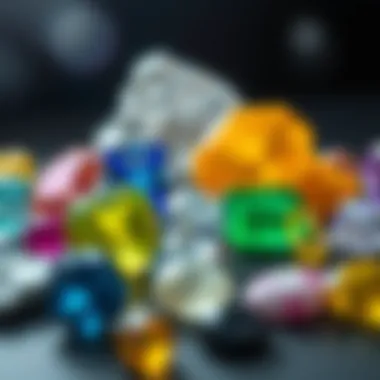

Emeralds
Color and Clarity Factors
Emeralds are renowned for their vivid green color, which is due to the presence of chromium and vanadium in their mineral structure. Clarity is also crucial; fewer inclusions typically mean higher quality. The intriguing aspect of emeralds lies in how they are often more appreciated for their color than for their clarity, diverging from the norms applied to other gemstones. This creates a unique appreciation among collectors who often find beauty in the imperfections that tell the stone's story. The rich green hue is symbolic of prosperity, further enhancing their allure.
Sources and Treatment
Emeralds primarily come from Colombia, Brazil, and Zambia. These sources determine not just a stone's value but its unique characteristics as well. Treatments such as oiling are often employed to enhance clarity and color, which is crucial knowledge for collectors deep in the fields. Understanding these sources allows aficionados to better discern quality, appreciating the piece not just for its aesthetics but for the journey it has taken.
Rubies
Origin of Color
Rubies achieve their deep red color primarily due to traces of chromium. The intensity of color can vary greatly, and the most vibrant shades often command higher prices. This unique origin of color, specifically from chromium, makes rubies particularly fascinating in the realm of gemstones because it highlights how parent materials affect the end product. Collectors often find the signatures of these minerals—evident in their color—an essential part of their collecting narrative.
Significance in Culture
Culturally, rubies have held significant importance across many societies. In ancient cultures, rubies symbolized power and love, often being deemed the "king of gemstones". Their cultural legacy contributes contextual value that enriches the collector's experience. Each ruby encapsulates centuries of historical and cultural significance, thus making them more than just beautiful stones but carriers of stories.
Sapphires
Diversity of Colors
While sapphires are commonly recognized in blue hues, they actually come in a myriad of colors due to variances in trace elements. This diversity is a captivating aspect for collectors because it broadens the spectrum of sapphires beyond traditional norms. Collecting a variety of sapphires allows enthusiasts to showcase not just the beauty but also the versatility of this stone. The different colors also represent different meanings, enriching the collector’s narrative.
Sapphire Treatments
Similar to emeralds, sapphires often undergo treatments to enhance their color or clarity. Treatments can range from heat treatment to more complex processes. Knowing about these enhancements can help collectors make informed choices, understanding both the enhanced beauty and the potential impact on value. It also calls into question the authenticity of the gemstones, adding a layer of complexity to the collecting experience.
"In each of these notable stones, the intertwining of beauty, science, and culture embodies a timeless fascination that transcends generations."
Understanding notable types of stones and gems sets the groundwork for appreciating not only their collector's value but also their cultural significance and industrial practicality. With this exploration, you are better equipped to navigate the intricate universe of stones and gems, making informed decisions within the realms of collection, appreciation, and application.
Characteristics of Stones and Gems
The characteristics of stones and gems form the bedrock of our understanding and appreciation of these natural wonders. Through analyzing their features, collectors and enthusiasts can discern quality, value, and appropriate applications in a variety of contexts. By diving into specifics such as physical properties and chemical compositions, we garner insights that shape our collection strategies, investment choices, and even artistic preferences. Grasping these elements reveals not only the beauty of stones and gems but also their intrinsic worth, making this discussion paramount to any serious exploration of the subject.
Physical Properties
Hardness and Durability
Hardness and durability are two of the most prominent features of stones and gems that contribute to their desirability. Mohs hardness scale, ranging from one to ten, offers a systematic measure of a material's resistance to scratching. For instance, diamonds, rated at a ten, present unparalleled toughness, making them essential for both jewelry and industrial applications. The hardiness of a stone ensures it withstands day-to-day wear, maintaining its allure over time.
However, this strength doesn’t always come without trade-offs. While hard stones like sapphires might resist scratches, they can be prone to breaking under high impact if not treated with care. Collectors must strike a balance between hardness for longevity and the potential fragility associated with specific cuts or settings.
Luster and Transparency
Luster describes how light interacts with the surface of a stone. It can be categorized into several types: vitreous, pearly, waxy, and more. The gemstone’s luster directly influences its appeal – think of how a well-cut amethyst catches the light, radiating purple shades from every angle. A stone's transparency, or lack thereof, frames its inherent beauty and can dictate its market value. Clear stones like quartz are cherished for their visibility, while opaque varieties may hold mystery and intrigue.
Considering luster and transparency is crucial for anyone in the industry. A high-quality gemstone reflects light beautifully, enhancing its marketability. Yet, low luster or unclear materials might disappoint collectors and impact pricing negatively. Knowing how to assess these qualities can lead to better purchasing decisions.
Chemical Composition
Elemental Structure
The composition of a gem dictates everything from its color to its durability. Elements like carbon in diamonds create their unique properties. Other stones have varying compositions that determine features like color saturation and brilliance. For example, the rich green of an emerald comes from trace amounts of chromium or vanadium mixed with beryllium.
Understanding the elemental structure helps collectors decipher the potential of their finds. Certain elements can enhance a stone's value, creating a delightful interplay between nature's artistry and geological science. However, not all compositions deliver quality; some impurities, while adding character, might diminish the overall value or durability of the stone.
Effects on Color and Clarity
Color and clarity form the backbone of a gem's identity. Factors contributing to these characteristics include the gem’s light absorption and its chemical makeup. For instance, inclusions within a garnet can create spectacular shines, but excessive or poorly placed inclusions can detract significantly from a gemstone’s overall aesthetic appeal.
Moreover, how a gemstone absorbs light also plays a role in its desirability. The deeper the color usually translates to a gem of higher quality; rich hues often command significantly higher prices at auction than their paler cousins. Thus, understanding how color and clarity manifest from elemental structures is vital for collectors wanting to maximize the aesthetic and financial value of their stones.
The Journey of Stones and Gems
The path that stones and gems take from their natural settings to markets, and ultimately to collectors and consumers, is a remarkable journey. It’s not just about mining and selling; it encompasses multiple facets that are crucial to understanding the true value of these materials. Knowing this journey provides insight into how gems and stones are not only formed but also how they acquire meaning over time. This understanding connects us to the history, culture, and science behind each piece.
From Mine to Market
Extraction Techniques

Extraction techniques refer to the methods used to remove stones and gems from the earth. This aspect is vital because the way in which a stone is extracted can significantly impact its quality and value. Several methods exist today, each with its own set of advantages and drawbacks. In most cases, traditional mining tends to be more labor-intensive but less damaging to the surrounding environment compared to mechanical means.
Moreover, artisanal mining has gained popularity for its ability to engage local communities and support livelihoods. A characteristic that makes this method appealing is its minimal use of heavy machinery, allowing for less ecological disturbance. On the flip side, such practices may lead to inconsistency in quality and could sometimes fall under poor working conditions without proper oversight.
- Unique Features: Traditional and artisanal mining methods often unearth one-of-a-kind stones since they rely on human skill and intuition to locate gems.
- Advantages/Disadvantages: Artisanal techniques empower local miners but often yield lower quantities of gems, while mechanized methods provide efficiency but can lead to significant environmental degradation.
Trade and Valuation
When it comes to trade and valuation, the process is complicated and involves various economic factors, such as demand, rarity, and historical significance. The global market keeps shifting, yet some stones retain a high value due to their cultural context. One of the key characteristics of stones like diamonds is the intricate grading system based on quality, known as the Four Cs: cut, clarity, color, and carat.
- Why Important? Understanding trade helps collectors determine how to assess the worth of their stones. Currently, online marketplaces such as Etsy and specialized auction sites have made it easier for collectors to connect and trade.
- Unique Features: The fluctuation of demand can lead to surprising market trends. A particular gem can see its value soar based on sudden consumer interest or celebrity endorsements.
- Advantages/Disadvantages: While a well-structured market offers transparency, it can be influenced by speculation, making the prices volatile.
Industrial Applications
Use in Technology
Stones and gems are not just eye-candy; they have practical applications in various cutting-edge technologies. For example, silicon from natural stones is crucial in manufacturing semiconductors. Advances in technology amplify the importance of certain gems, particularly diamonds, which are used not only in jewelry but also in high-tech equipment like lasers.
- Why Worth Mentioning? Their essential role in technology demonstrates that stones and gems aren’t merely decorative; they are integral to modern advancements.
- Unique Features: Many gems can withstand extreme temperatures and pressures, allowing them to be utilized in electronic devices. However, sourcing these gems ethically remains a challenge.
Construction Materials
When we think about construction materials, stones like granite and marble come to mind. These materials have exceptional durability and aesthetic appeal, making them popular choices for buildings and monuments. The construction industry has long relied on these gems for both structural integrity and artistic expression.
- Why Relevant? Understanding the role of stones in construction allows for the appreciation of their historical significance, especially in architecture.
- Unique Features: Utilizing natural stones can significantly reduce the ecological footprint compared to synthetic materials. However, extraction impacts and the cost of sourcing can be drawbacks to consider.
Collecting and Preserving Stones and Gems
The pursuit of collecting stones and gems captivates a diverse base of enthusiasts from amateurs to seasoned connoisseurs. This practice goes beyond mere acquisition; it forms a bridge between nature and the human experience, revealing the universe's intricate work through geological processes that span eons. Collecting offers a myriad of benefits, including educational opportunities and personal satisfaction found in documenting unique specimens. Preserving these treasures becomes equally vital, ensuring their integrity and beauty withstand the ravages of time.
Starting a Collection
Essential Tools
Starting a collection requires more than just a keen eye for stunning specimens. Basic tools are essential to aid collectors in their journey. A quality magnifying glass is indispensable; it allows one to scrutinize the intricate details of each gem or stone, fostering a deeper connection and understanding into their individual characteristics. Additionally, a soft bristle brush serves to keep these beauties clean without scratching delicate surfaces.
Perhaps the most crucial tool, however, is a dedicated journal or database to keep track of each piece. This record doesn't just help in cataloging stones but also documents their origins and unique stories. It's a passion project where you can jot down experiences, observations, and personal reflections. Choosing good tools enhances the overall collecting experience, making it more enjoyable and organized.
Choosing a Focus
Deciding on a focal point for a collection can shape the journey in substantial ways. Specializing in a particular type of gem—be it quartz, opal, or any other—allows a collector to gain expertise in that area. This focused approach fosters a comprehensive understanding, enabling collectors to distinguish between genuine specimens and less valuable imitations more easily.
Moreover, a concentrated theme can improve the aesthetic appeal of a collection, creating visual harmony and resonance. However, narrowing down can also be a double-edged sword. Some may find it confining as new interests arise or discover fascinating specimens outside their chosen focus. Flexibility in this focus allows for exploration without straying too far from core interests
Preservation Techniques
Preserving stones and gems is pivotal to maintain their allure and value. Proper preservation not only safeguards their external beauty but also protects the geological history they represent. Implementing effective techniques guarantees that future generations will appreciate these irreplaceable natural artifacts.
Cleaning and Care
Regular maintenance starts with cleaning and caring for your collection with precision. Gentle methods are the key to keeping stones in pristine condition. Using warm water and a mild soap solution maintains their sparkle without damaging underlying structures. Special attention is warranted for soft stones and gems, as they can be particularly susceptible to scratches and wear.
It's wise to avoid harsh chemicals that could tarnish surfaces or alter colors. A soft cloth or microfiber towel can gently dry gems after cleaning, restoring their natural luster. Establishing a routine for upkeep can catch potential issues, such as loose settings in jewelry, before they escalate into serious concerns.
Storage Solutions
Finding the right storage solutions ensures these treasures remain as alluring as the day they were acquired. Dry, dark conditions are optimal, as prolonged exposure to sunlight can fade color over time. Individual containers lined with soft materials like velvet help protect delicate surfaces from scratches and prevent stones from rubbing against one another.
Another consideration is the humidity levels; ideally, stones should be stored in a cool environment. Collectors might also employ desiccants, like silica gel packets, to manage moisture. Custom display cases can also serve both to showcase the collection attractively and provide adequate protection from dust.
Proper storage is not just about aesthetics; it’s about ensuring the longevity of each stone.
To encapsulate, the art of collecting and preserving stones and gems brings together elements of passion, knowledge, and responsibility. From choosing the right tools to understanding cleaning and storage methods, each step in this journey fosters a deeper appreciation for Earth's natural wonders. As collectors embark on this adventure, they ensure that these spectacular gifts of nature remain pristine for years to come.
End
The exploration of stones and gems is not merely an academic interest; it encapsulates a realm where nature's artistry converges with human fascination. This journey from rocky formations deep within the Earth to exquisite pieces adorning our lives underscores the profound impact these materials have on various aspects of both culture and industry. In recent decades, as the world's focus shifts towards sustainability and ethical sourcing, understanding the intricacies surrounding these treasures is paramount.
The Ongoing Fascination with Stones and Gems
This enthusiasm could stem from several factors, such as:
- Historical Significance: Many gemstones have rich stories tied to culture, wisdom, and power. Take the diamond, for example; throughout history, it has symbolized wealth and status, yet its journey from the depths of the Earth to the crown jewels is filled with tales of adventure and human effort.
- Scientific Curiosity: The geological processes that create these stones can captivate anyone with a penchant for the natural sciences. Each stone has a unique narrative of formation, shaped by heat, pressure, and time.
- Emotional Connections: For many, these gems carry personal significance—whether as heirlooms or tokens of love, they often grow beyond the tangible value to become vessels of cherished memories.
"The real magic of stones and gems isn't just in their beauty—it's in their ability to connect with us on a deeply personal level."
The ongoing interest can also be attributed to the vibrant communities that form around collecting, preserving, and understanding these natural wonders. Enthusiasts often gather in forums or local meets, sharing insights and discoveries, forging connections that transcend borders.
In summary, studying stones and gems opens a window to diverse fields, from geology and history to art and personal experience. It’s a rich tapestry continuously woven with strands of curiosity, emotion, and culture, inviting all of us to engage with it in meaningful ways. As interest burgeons, it’s essential to recognize the responsibility that accompanies such fascination, particularly concerning ethical sourcing and environmental stewardship.
As we move forward, it remains critical to blend passion with informed responsibility, ensuring the beauty of these treasures continues to be appreciated by future generations.