Chiastolite: Significance, Properties, and Uses
Intro
Chiastolite is much more than just another mineral found in the depths of our planet. Its unique twinning patterns enable it to stand out among its peers. These patterns, resembling a multi-colored cross, are created through a fascinating process that makes chiastolite not just a captivating subject for study but also a prized item for collectors abundant in the world of geology. Furthermore, the rich history and cultural significance associated with chiastolite mean it has garnered a range of interpretations across different civilizations, making its story both complex and intriguing.
In this article, we shall pull apart the layers of chiastolite to reveal both its literal and metaphorical significance. From geological origins to tales spun throughout history, the narrative of chiastolite is as rich as the mineral itself. For rock and fossil collectors, understanding every facet of chiastolite—from its composition and the variations it can manifest to its metaphysical properties—can refine the appreciation they have for it, connecting them deeper to both the earth and its myriad cultures.
So, let’s embark on this exploration, discovering why chiastolite deserves a spot in both collections and conversations alike.
Prelude to Chiastolite
Chiastolite has carved a niche in both the geological and collector's circles with its intriguing characteristics and historical depth. This mineral is more than just a pretty rock—it offers insights into the natural world's intricate processes and humanity's cultural engagements with stones. Understanding chiastolite provides enthusiasts and collectors with not just knowledge, but also a deeper appreciation of the earth's history and the stories behind these striking minerals.
In this article, we will delve into various aspects of chiastolite, highlighting its unique traits and significance. From its formation deep within the Earth to its varied uses in jewelry and decorative arts, chiastolite holds a mirror to both nature and culture. By contemplating its physical properties, historical significance, and metaphysical beliefs, readers will develop a well-rounded grasp of this captivating mineral.
Moreover, appreciating chiastolite goes beyond mere aesthetics; it invites exploration of ethical considerations surrounding mineral collection and sustainability. This awareness is crucial for collectors aiming to enhance their collections while being responsible stewards of the Earth. As we journey through the layers of information about chiastolite, those curious minds will find not just facts, but also connections to broader themes in geology, culture, and metaphysics.
Definition and Overview
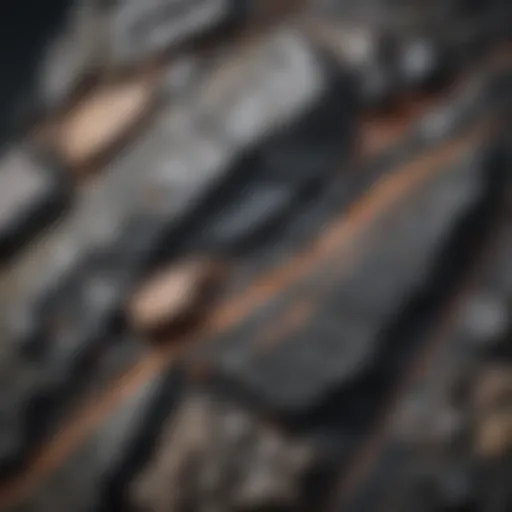
Chiastolite, a variety of andalusite, is a silicate mineral known for its distinctive cross-shaped inclusions. These patterns often resemble a star and lend this mineral its charm and collectible allure. Found primarily in metamorphic rocks, chiastolite usually appears in shades of brown, green, gray, and even black, wielding an unusual beauty shaped by geological forces.
The presence of chiastolite can be observed in various parts of the world, including the U.S., Spain, and Brazil. Details such as these become invaluable for collectors hunting for specific characteristics in their mineral samples. Understanding its composition and the conditions under which it forms opens up pathways to recognizing its unique presence in the rock and fossil collection.
Historical Context
When looking at the historical context of chiastolite, one may be surprised by its prominence through the ages. Ancient civilizations placed great value on stones, utilizing them for both decorative and spiritual purposes. In particular, chiastolite was often associated with protection, with records indicating that this mineral was sometimes crafted into amulets.
Moreover, the mineral has inspired artists and craftspersons throughout history. The stunning patterns have found their way into various art forms, from carvings to jewelry making, creating a sense of connection between people and the natural world.
In more recent times, scholars and collectors have delighted in the geology and aesthetics of chiastolite, solidifying its place not only in historical anecdotes but also in modern culture. An understanding of its past enriches the journey for any collector looking to add a layer of significance to their collection, bridging the gap from ancient allure to contemporary admiration.
"The beauty of chiastolite lies not just in its appearance, but in the rich tapestry of stories and beliefs woven around it through time."
As chiastolite's journey continues into the present and beyond, its multifaceted identity highlights the interplay between natural phenomena and human experience, making it a cornerstone of discussion among mineral lovers.
Geological Formation
Understanding the geological formation of chiastolite is essential, as it lays the foundation for appreciating this striking mineral. Chiastolite is a variety of andalusite, characterized by its distinct cross-shaped inclusions that often appear like a dark pattern against its lighter backdrop. These unique attributes are not just for show; they signify the historical conditions under which chiastolite formed and the geological processes involved.
Formation Process
The formation of chiastolite occurs under specific conditions that most enthusiasts may not appreciate at first glance. It is typically found within metamorphic rocks formed under high-temperature and pressure conditions. The transformation happens when clay-rich sediments with high aluminum content undergo metamorphism. The resulting changes create the conditions necessary for chiastolite to crystallize.
Here's a simplified breakdown of the process:
- Source Material: Chiastolite begins as a sedimentary rock, primarily composed of clay and silt.
- Metamorphism: Intense heat and pressure lead to recrystallization. During this, the aligned micas and other minerals begin to form a new crystalline structure.
- Inclusion Formation: The infamous cross-shaped patterns are the result of carbon-rich material and iron oxide inclusions that get trapped during the crystallization process.
Such details show how chiastolite is an observable record of geological history, reflecting the environmental conditions prevalent during its formation.
Location and Distribution
Chiastolite can be found in various locations around the globe, a fact that appeals primarily to mineral collectors. Notable deposits include regions in Spain, particularly in the Pyrenees, Australia, and parts of the United States, like Virginia and Pennsylvania. The geological settings of these deposits not only provide collectors with diverse samples but also reveal much about the mineral's creation.
- Spain: Known for some vibrant samples, this region holds a rich geological history that contributes to the unique characteristics of chiastolite found here.
- Australia: The deposits here often reveal variations in color and pattern, giving collectors an opportunity to appreciate chiastolite in multiple forms.
- United States: Many creeks and riverbeds feature this mineral, leading to recreational collecting, particularly in the eastern states.
Collectively, these locations highlight the widespread distribution of chiastolite across different geological formations. This accessibility makes it a coveted find for rock hounds and offers insights into the varying environmental conditions under which the mineral can form.
The geological formation of chiastolite not only illustrates its physical properties but also serves as a gateway to understanding the Earth's history.
Physical Properties
Understanding the physical properties of chiastolite is crucial for collectors and enthusiasts alike. These characteristics not only define the mineral's unique appearance but also speak to its formation process and the environments in which it can be found. Knowledge of these properties enriches the collector's experience, allowing them to better appreciate the mineral's beauty and significance. This section covers two main areas: the crystal structure and the color variations and patterns that make chiastolite a captivating subject in mineralogy.
Crystal Structure
Chiastolite exhibits a distinct crystal structure that helps to differentiate it from other minerals in the same family. It belongs to the orthorhombic crystal system, characterized by its elongated, prismatic forms. The crystals typically show a distinctive cross-shaped pattern, which results from the presence of carbonaceous materials during the mineral's formation.
The internal arrangement of atoms in chiastolite contributes to both its physical strength and aesthetic charm. This peculiar structure can be analyzed through X-ray diffraction and other methods, revealing how the atoms stack and bond together—an investigation often overlooked by casual collectors. In many ways, the crystal structure can serve as a fingerprint for each specimen, allowing collectors to identify genuine chiastolite from simulative imitations.
Color Variations and Patterns
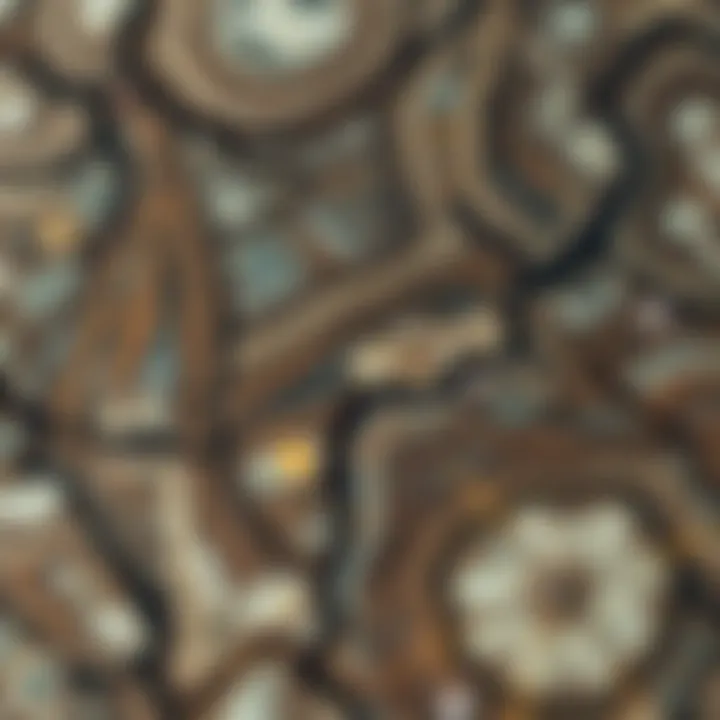
Chiastolite does not come in a single, uniform color; the variations can be quite striking and diverse. Typically, it can be found in shades of brown, black, and green, often infused with delicate flecks of white and gray. The characteristic cross-banded patterns arise from the mineral's graphitic inclusions, which can create a beautiful visual contrast against the base color of the mineral.
These color variations can also be indicative of how the mineral has been exposed to environmental conditions over time. For instance:
- Brown Chiastolite: Generally formed at higher pressures and temperatures, it's often found in metamorphic rock settings.
- Black Chiastolite: This darker variant could reveal a rich, organic content, sometimes sought after for its deep hues.
- Green Chiastolite: A rarer find, often connected to specific geological environments, making it a gem in the eyes of collectors.
Collectors should pay attention to these color variations, as they not only dictate desirability in the marketplace but also contribute to the narrative of the mineral’s past—an ongoing story of geological change and formation.
"The beauty of chiastolite lies not merely in its visual appeal but in the tales that its colors and patterns tell, echoing the breath of Earth’s ancient history."
In summary, the physical properties of chiastolite—its crystal structure and the accompanying color variations and patterns—are fundamental for appreciating the mineral's uniqueness. For both collectors and the scientific community, these properties provide essential insights into chiastolite's past and potential applications.
Chiastolite in Collecting
Chiastolite holds a unique place in the hearts of mineral collectors. Its distinctive twinning patterns and historical significance elevate it above other stones. Those interested in mineralogy often find themselves drawn to its beauty and rarity. Understanding chiastolite can enhance one's collection and appreciation for the geological processes that yield such extraordinary minerals.
Identification Tips for Collectors
To successfully identify chiastolite, collectors need a keen eye and a few practical tips to navigate through similar minerals. Consider the following:
- Color Patterns: Chiastolite displays unique color patterns, often showing dark, cross-like formations. When examining a specimen, look for these distinctive hues.
- Hardness: Chiastolite typically falls around a 6.5 to 7 on the Mohs scale. Therefore, testing its hardness against other known minerals can be useful.
- Luster: This mineral possesses a vitreous to pearly luster. Inspecting the stone under light can help confirm its luster quality.
- Structure: Take note of the crystal structure. Chiastolite forms in a columnar or prismatic shape, which often aids in differentiation from other stones.
With these tips in hand, collectors can become adept at recognizing chiastolite in the field or at sales.
Market Value and Rarity
The market value of chiastolite can vary significantly depending on several factors, including size, clarity, and provenance. Notably, it's essential to remember that chiastolite is categorized as a relatively rare mineral. Due to its limited distribution, you may find some specimens fetching higher prices, especially those exhibiting pronounced patterns.


- Prices: Typical small specimens may range from $10 to $50, while larger, well-patterned pieces could reach into the hundreds or even thousands.
- Up-and-Coming Collectibles: As awareness of chiastolite grows, particularly in the realm of metaphysical and healing properties, new collectors are entering the scene willing to pay premium prices.
- Investment Considerations: Investors should keep current market trends in mind. As certain desirable specimens become scarce, they could see increased demand. Keeping an eye on auction sites or collector groups, such as Reddit's mineral collecting community may reveal vital information about price fluctuations and worth.
Considering the factors affecting market demand and value, it is crucial for collectors to engage with fellow enthusiasts to stay informed about the evolving market.
"Chiastolite's rarity and beauty make it a prized possession for any serious collector, showcasing the natural artistry of our planet."
Cultural Significance
When it comes to the deeper cultural meaning of chiastolite, it’s like peeling layers of an onion—there's much more than meets the eye. This mineral isn’t just a geological curiosity, but also a symbol of various meanings across different societies. It holds a mirror to the values, beliefs, and artistic expressions of the cultures that have embraced it.
Symbolism Across Cultures
Across varied cultures, chiastolite represents a bridge between the earthly and the ethereal. In some Indigenous cultures, it is considered a stone of communication between worlds, functioning as a conduit for understanding and prosperity. People believe that it carries the wisdom of ancestors, offering guidance through life's complex decisions.
- Ancient Egypt: Egyptians often saw chiastolite as a protector against evil. They believed that its unique cross patterns harmonized energies and created a shield in spiritual practices.
- Native American: For many Native American tribes, chiastolite is more than a pretty stone. Its formation, with the natural cross-like patterns within it, symbolizes balance and harmony in life. It’s not uncommon to find it used in ceremonial attire or associated with stories passed down through generations.
- European Folklore: In medieval Europe, chiastolite was often referred to as the "cross stone". It was thought to possess healing properties, sometimes carried as talisman against misfortune. The belief was that it could foster a connection with the divine.
"The true magic of chiastolite is wrapped in its stories, transcending mere aesthetics to foster connections among communities and traditions.”
Usage in Art and Jewelry Making
Chiastolite isn’t just famous for its metaphysical properties; it also has a notable presence in the world of art and jewelry. Artists and craftsmen have long appreciated its unique aesthetic qualities, incorporating it into their creations.
- Jewelry: Its distinctive coloration and cross-sectioned patterns make chiastolite a popular choice in jewelry design. Whether set in silver or gold, it often dazzles collectors with its visual appeal and sentimental value. Pendants, rings, and bracelets carrying this mineral resonate deeply with those who appreciate natural beauty.
- Sculpture and Artworks: Artists have also carved chiastolite into sculptures, with each piece telling a different story through its unique patterns. These pieces often serve as centerpieces in galleries or create a soothing presence in homes, reflecting the diverse cultures and times from which chiastolite stems.
- Folk Art: Many cultures have embraced chiastolite in folk art, crafting objects that reflect everyday life, spirituality, or local legends. Each creation strives to capture the heart of the maker, embedding a piece of personal history in every design.
Metaphysical Properties
Chiastolite, beyond its appealing physical traits, carries a wealth of metaphysical properties that many rock and crystal enthusiasts find compelling. Cultures across the globe have woven beliefs and practices around this mineral, attributing various symbolism and spiritual significance to it. Engaging with its metaphysical aspects can add layers of meaning, not just for collectors but also for those looking to harness the energy and protective qualities associated with this stone.
Beliefs and Practices
Throughout history, chiastolite has been more than just a fascinating mineral; it has been viewed as a bridge to the spiritual realm. Many believe that the unique cross-like patterns observed in chiastolite crystals embody a representation of balance. This symbol of equilibrium ties to the concept of duality found in various cultures, indicating the harmony between opposites. This harmony is particularly appealing to those exploring wellness and mindfulness.
In modern spirituality practices, chiastolite is often used in meditation and visualization techniques. Practitioners place this mineral on their bodies or hold it in their hands, hoping to foster a deeper connection with their intuition and inner self. Furthermore, chiastolite is believed to assist in grounding energies, helping individuals anchor themselves during emotional or psychic turbulence. It’s often said that keeping chiastolite in one’s living space can enhance a sense of stability.
"A stone of balance, chiastolite encourages one to accept the contrasts and complexities of life while remaining centered in one's own space."
These beliefs about chiastolite also extend to protective uses. In many traditions, it’s thought to guard against negative energies and psychic attacks. Those who engage in spiritual practices may carry chiastolite with them as an amulet, believing that its presence can shield them from harmful influences.
Healing and Protective Qualities
In the realm of healing crystals, chiastolite stands out for its reputed protective qualities. Many enthusiasts claim that this stone helps to dispel negative thought patterns and enhances emotional resilience. It's commonly said that chiastolite fosters an environment where healing can occur, allowing individuals to confront distressing life experiences. In healing circles, chiastolite may be used to aid in cutting energetic cords that tie one to past emotional pain or toxic relationships.
From a physical standpoint, practitioners often emphasize chiastolite’s ability to promote recovery from physical ailments. Some believe that wearing chiastolite can elevate one's overall vitality and reinforce the healing process. While these claims often lack rigorous scientific backing, anecdotal evidence suggests that many users report feeling a sense of rejuvenation and clarity when using chiastolite in their routines.
Another aspect of chiastolite’s protective abilities includes its reputed role in facilitating communication with higher spiritual guides. Collectors and spiritual practitioners often keep chiastolite near their meditation spaces, believing that it assists in sharpening one’s intuition and receptivity to spiritual insights.
Conservation and Ethical Considerations
Conserving natural resources and ensuring ethical practices in the collection of chiastolite is crucial for several reasons. First, this mineral is not just a mere geological specimen but a part of cultural and ecological heritage. As interest in rock and mineral collecting expands, it becomes increasingly important for collectors and enthusiasts to approach their hobby with a sense of responsibility. Engaging in sustainable collecting ensures the longevity of chiastolite deposits and protects delicate ecosystems from degradation caused by overharvesting and irresponsible mining practices.

Sustainable Collecting Practices
Sustainable collecting practices focus on minimizing the environmental impact of mineral collection. Here are a few strategies that collectors can adopt:
- Research before collecting: It’s vital to know about the locations where chiastolite is found. Understanding the local regulations and ethical standards helps ensure that your collecting practices contribute positively to preservation efforts.
- Limit collection quantities: Only take what you need. Overcollection can lead to shortages in the natural environment, which might affect not only the availability of chiastolite but also the surrounding ecosystem.
- Avoid sensitive areas: Steer clear of locations that are ecologically fragile or protected. Collecting in such places can result in irreversible damage to local habitats.
- Participate in local initiatives: Many areas have conservation programs focused on protecting geological and natural resources. Join these efforts and promote responsible collecting to share knowledge with others in your community.
Legal Protections and Regulations
Understanding and adhering to legal protections and regulations regarding chiastolite is important for both collectors and the environment. Here are some facets to consider:
- Mining laws: Different regions have distinct laws regarding mineral extraction. Some areas may prohibit collection entirely, while others might require permits for mining or collecting practices. Always check local legislation which can frequently be found on government websites like *.gov or through geological surveys.
- Endangered species and habitats: Certain locations where chiastolite is found could host endangered flora and fauna or sensitive habitats. Activities in these areas may be heavily regulated or restricted, reinforcing the need to do thorough research before heading out with your collection tools.
- Labeling and documentation requirements: In some places, collectors may be required to document their finds, especially in contexts related to scientific research. Such practices not only enrich the collector’s experience but also contribute vital data to ongoing geological studies.
"Ethical collecting is essential as it emphasizes respect for both our natural world and the cultural significance of the minerals we pursue."
By aligning your collecting methods with sustainable practices and adhering to legal protections, you contribute to the conservation of chiastolite and foster an environment where this unique mineral can continue to be appreciated for generations to come.
Chiastolite and Modern Applications
Chiastolite, with its striking appearance and versatile properties, is gaining traction in various disciplines, from industry to academic research. Its unique characteristics make it more than a mere collectible; it has practical applications that intersect with modern technology and environmental stewardship. Understanding these applications provides clearer insights into not only the mineral itself but also how humanity can utilize natural resources wisely.
Industrial Uses
In the industrial context, chiastolite stands out primarily due to its distinctive thermal and chemical stability. Here are several notable applications:
- High-Temperature Kilns: Chiastolite is often utilized in the production of refractory materials. Its ability to withstand extreme temperatures makes it an ideal candidate for components in high-temperature kilns, used in ceramics and glass manufacturing.
- Electrical Insulation: Its quality as an insulator is particularly useful in the electrical sector. Chiastolite’s low thermal conductivity is advantageous in devices that require heat shielding and electrical containment.
- Composite Materials: In recent years, chiastolite has been employed in composite materials for construction. The mineral is valued for its strength-to-weight ratio, contributing to sturdy yet lightweight offerings for modern architectural designs.
- Acoustic Panels: Chiastolite's unique properties allow it to be employed in acoustic treatments, helping to dampen sound in various settings, from recording studios to public spaces.
These applications highlight how chiastolite is not just an aesthetic choice; it also plays a substantial role in enhancing industrial processes. By incorporating this mineral, industries can improve efficiency and sustainability, proving that an appreciation for natural materials can lead to innovative solutions.
Role in Scientific Research
Beyond industrial applications, chiastolite serves as a valuable mineral in scientific research. The reasons for its significance are manifold:
- Geological Studies: Chiastolite's unique crystal structure makes it a focal point for geological studies. Scientists utilize chiastolite to understand metamorphic processes and the conditions under which it forms. This contributes to a broader understanding of the geological history of Earth, offering clues about past environmental conditions.
- Metaphysical Research: While its metaphysical properties are often regarded with skepticism in scientific circles, the interest is undeniable. Some researchers are exploring the psychological effects associated with various minerals, including chiastolite, particularly regarding its purported energy properties.
- Educational Value: Chiastolite serves as an educational tool in mineralogy courses. Students benefit from studying its unique twinning patterns, which exemplify the complexities of crystal growth and formation.
- Archaeological Findings: Chiastolite is also found in certain archeological contexts, providing insights into historical trade routes and cultural practices. The study of this mineral can reveal much about ancient societies' uses of natural resources.
"Chiastolite not only enhances our understanding of natural processes but connects us to our past, embodying both scientific and cultural heritage."
Integrating chiastolite into various fields underscores its dual role as a mineral of beauty and functional importance. As we continue to explore its applications, it becomes clear that chiastolite is much more than just another rock; it embodies the intersection of nature, technology, and culture.
Closure
The conclusion of this article serves as a crucial reflection on the multifaceted significance of chiastolite. Throughout our exploration, we've examined not just the mineral's physical properties and geological formation, but also its rich cultural history and metaphysical implications. This isn't just a rock; it's a narrative etched in stone, connecting us to our planet's history and our human experience.
Summary of Key Points
- Geological Formation: Chiastolite forms under specific conditions deep within the Earth, showcasing a unique mineral structure that impresses both enthusiasts and professionals in the geological field.
- Physical Properties: Its distinct color variations and twinning patterns not only enhance its aesthetic appeal but also provide invaluable insights into the Earth's geological processes.
- Cultural Significance: This mineral carries rich symbolism across various cultures, often regarded as a stone of balance and transformation.
- Metaphysical Properties: Ascribed with healing and protective qualities, chiastolite is sought after by those who value its supposed metaphysical benefits, adding another layer to its allure.
- Modern Applications: Its role in scientific research and occasional industrial uses demonstrate how this mineral fits into both historical and modern contexts, providing collectors a deeper appreciation for its value.
The journey through chiastolite reveals so much more than mere facts; it unveils an essential part of Earth’s story.
Future Directions in Chiastolite Research
As knowledge about chiastolite continues to evolve, several avenues for future research could enhance our understanding of this mineral. Some key directions include:
- Advanced Geological Studies: Further exploration into the conditions under which chiastolite forms could yield insights into the Earth’s history, especially regarding climate and tectonic activities. These studies could also explore its formations in various geological contexts.
- Metaphysical Investigations: A rigorous examination of the metaphysical claims surrounding chiastolite could bring forth scientific validation or dispel myths, bridging the gap between spiritual beliefs and empirical studies.
- Ecological Impact: Research into the environmental implications of chiastolite mining operations could help establish sustainable practices, urging collectors and industry professionals to adopt responsible sourcing.
- Technological Uses: Investigating potential applications within technology and materials science could open doors to innovative uses, expanding chiastolite's relevance beyond the realm of collection and artistry.
By pushing the boundaries of our understanding, these future directions hold promise for enhancing civilization’s connection to this remarkable mineral, further solidifying its place in both cultural and scientific realms.